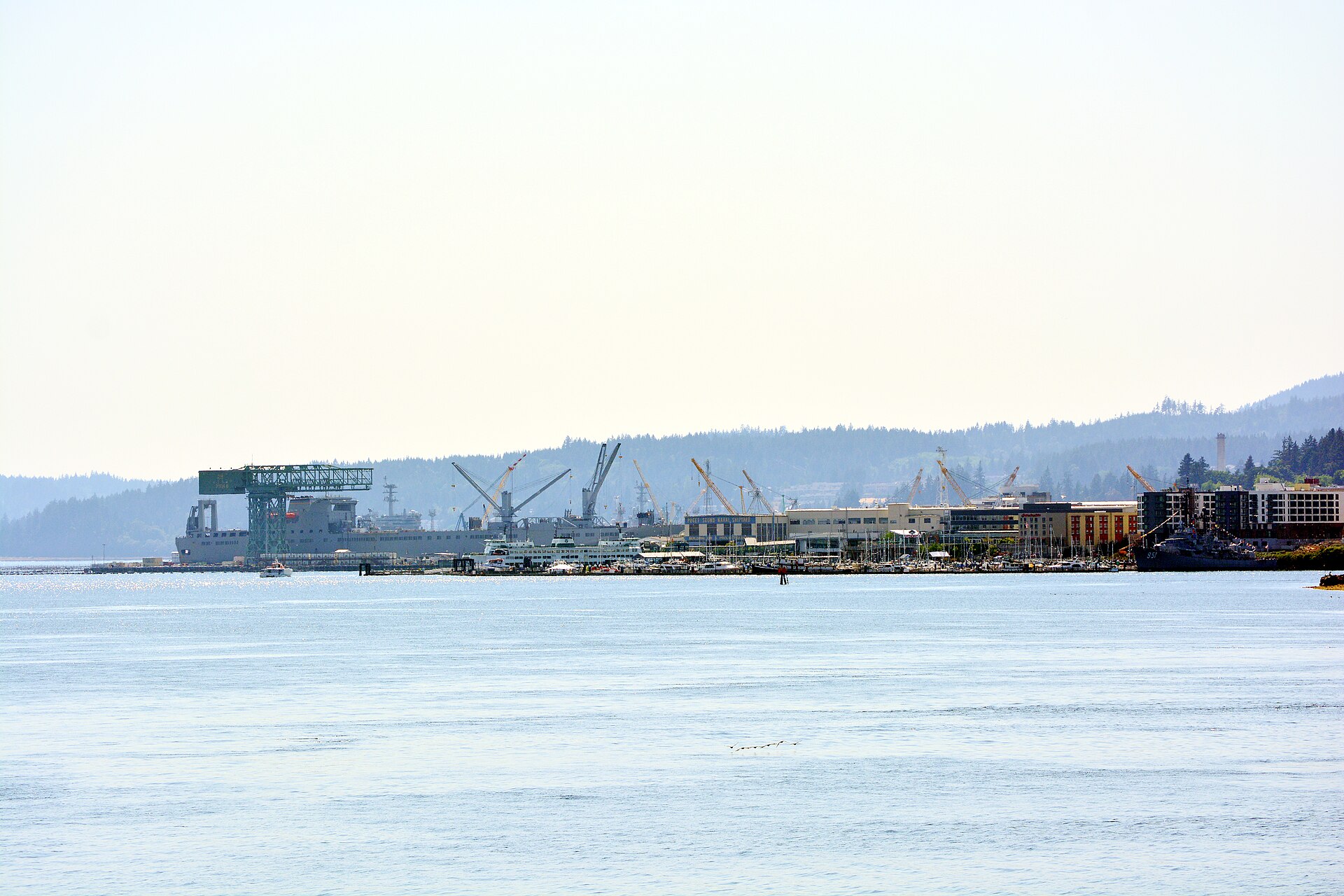
What Former PSNS Workers Need to Know
If you worked at Puget Sound Naval Shipyard in Bremerton and have been diagnosed with mesothelioma, asbestosis, or lung cancer, asbestos exposure decades ago is the most likely cause of your disease. The manufacturers who supplied those asbestos-containing materials are alleged to have known about the hazard and concealed it from the workers installing their products. The 20-to-50-year latency period between exposure and diagnosis means workers exposed during the Cold War era are receiving diagnoses right now — and under the federal maritime statute of limitations (46 U.S.C. § 30106), the three-year clock starts running from your diagnosis date. Do not wait. This article covers what happened at Puget Sound Naval Shipyard, who was harmed, what diseases result, and what legal options are available to Navy veterans and civilian workers nationwide.
What Is Puget Sound Naval Shipyard?
Pacific Fleet Operations Hub
Puget Sound Naval Shipyard sits on the western shore of Sinclair Inlet in Bremerton, Washington. Established in 1891, PSNS has operated continuously for more than 130 years and remains a cornerstone of Pacific Fleet maintenance and repair. As the largest naval shipyard on the West Coast, PSNS processed thousands of vessels over its history, exposing generations of workers to asbestos-containing materials throughout that time.
Scale and Current Operations
- Footprint: Approximately 179 acres
- Dry dock capacity: More than 6,000 feet across four major dry docks
- Largest facility: Dry Dock 6, sized to accommodate nuclear-powered aircraft carriers
- Current workforce: Approximately 14,000 federal civilian workers — the largest single-site employer in Washington State
- Companion facility: Intermediate Maintenance Activity (IMA)
Historical Operations
PSNS performed new vessel construction, major overhaul and conversion work, and continuous maintenance on destroyers, cruisers, submarines, and aircraft carriers throughout the twentieth century. Worker numbers surged during World War II production and remained heavy through the Cold War era. Workers at naval shipyards in Norfolk, Virginia; San Diego, California; Pearl Harbor, Hawaii; Jacksonville, Florida; and Charleston, South Carolina were similarly exposed during these same decades — making shipyard asbestos exposure a systemic hazard across every major naval installation in the country.
Asbestos-Containing Materials Used at PSNS
Navy Specifications Required Asbestos
Asbestos was reportedly used throughout Puget Sound Naval Shipyard operations from the early 1900s through the late 1970s. Vessels undergoing overhaul well into the 1980s carried substantial residual asbestos-containing materials from prior construction. U.S. Navy technical specifications — including MIL-SPEC and NAVSEA standards — are alleged to have mandated asbestos-containing insulation for thermal and fire protection on virtually every shipboard system. These specifications applied Navy-wide, making asbestos exposure a uniform hazard across all major naval shipyards regardless of location.
ACM Products and Applications at PSNS
PSNS workers are alleged to have been exposed to the following products:
Thermal and Fire Protection Systems:
- Pipe covering and block insulation on steam, feed water, and condensate lines in engine rooms, firerooms, and machinery spaces — including Kaylo (Owens-Illinois), Thermobestos, Aircell, and block insulation from Johns-Manville and Armstrong Cork
- Boiler packing and refractory brick in propulsion and auxiliary boilers — components reportedly supplied by Combustion Engineering and Babcock & Wilcox
- Gaskets and valve packing from Crane Co. and Garlock Sealing Technologies, installed across thousands of pipe joints and valve bodies throughout each vessel
- Turbine and pump insulation using block insulation and wrapping materials from Johns-Manville and Owens Corning
Spray-Applied and Structural Materials:
- Spray-applied fireproofing including Monokote (W.R. Grace) and Zonolite, applied to structural steel and bulkheads in engine rooms and machinery spaces
- Transite board and asbestos cement products used in electrical panels, bulkheads, and machinery enclosures
- Deck tiles and adhesives containing chrysotile asbestos, including Gold Bond products installed throughout berthing and working spaces
- Textured coatings and joint compound applied to interior surfaces
Trades Most Exposed at PSNS
High-Exposure Occupations
Multiple trade classifications at PSNS are alleged to have faced daily asbestos exposure — particularly during dry dock overhaul operations when old, friable ACMs were being stripped from vessels and replaced.
Pipe and Insulation Trades:
- Pipe laggers and heat insulators (Heat and Frost Insulators union members) reportedly mixed, cut, and applied pipe covering products including Kaylo, Thermobestos, and Aircell — generating sustained airborne fiber concentrations throughout confined shipboard spaces for the duration of each job
- Pipefitters (Plumbers and Pipefitters UA locals) routinely cut and removed asbestos gaskets from Crane Co. and Garlock, then worked adjacent to lagging operations where block insulation was simultaneously being applied or stripped
Boiler and Steam System Trades:
- Boilermakers disturbed refractory brick, boiler packing from Combustion Engineering and Babcock & Wilcox, and gasket materials during tear-out and replacement of propulsion boiler components — among the heaviest fiber-release work performed at any naval shipyard
Electrical and Construction Trades:
- Electricians cut through transite board panels and worked in spaces where overhead pipe insulation was being disturbed simultaneously by other trades
- Carpenters cut and installed transite board and Gold Bond products in proximity to Monokote spray fireproofing operations
Surface and Finishing Trades:
- Painters applied and sanded surfaces adjacent to Monokote spray operations and worked with textured coatings that reportedly contained asbestos
- Welders worked directly below Kaylo and other lagging operations — torch-cutting of insulated pipe and radiant heat from welding routinely dislodged fibers into the breathing zone
Support Trades:
- Laborers and helpers swept and collected asbestos debris with minimal or no respiratory protection, concentrating disturbed fibers in enclosed shipboard workspaces
- Machinists in machinery spaces were allegedly exposed to fibers released by concurrent lagging and maintenance operations involving Johns-Manville and Owens Corning insulation products
Bystander Exposure
Every trade working in PSNS machinery spaces, engine rooms, and cargo holds during simultaneous overhaul operations inhaled fibers released by adjacent workers. Industrial hygienists testifying in subsequent asbestos litigation have described this bystander exposure as pervasive and continuous throughout the yard during peak overhaul periods.
Peak Exposure Periods at PSNS
Overhaul Operations: Highest Fiber Release
Dry dock overhaul and major repair work allegedly created the highest airborne fiber concentrations at PSNS — not new construction.
- New construction: Installing Kaylo, Thermobestos, and Johns-Manville pipe covering and block insulation generated substantial fiber release
- Overhaul operations (peak hazard): Removing and replacing decades-old, friable ACMs — including Monokote, transite board, and aged pipe insulation — in confined spaces allegedly generated fiber counts orders of magnitude higher than installation work alone. Friable asbestos that has hardened and degraded over 20 or 30 years releases far more airborne fiber when disturbed than freshly applied product.
World War II and Cold War Era: No Meaningful Protections
Workers reportedly had no effective respiratory protection during these peak decades:
- World War II production surge (1940s): Thousands of workers entered the yard under wartime production pressure with no asbestos safety protocols in place
- Cold War buildup (1950s through 1970s): Continuous heavy overhaul operations with an expanding workforce and no reduction in ACM use
- Concurrent trades: PSNS processed multiple vessels simultaneously, with pipefitters, laggers, boilermakers, and painters all working in the same confined engine rooms and machinery spaces at the same time
- No respirators: Workers had no respirators, or were issued only inadequate cloth masks, while cutting and removing Kaylo, Monokote, and other ACMs
- No containment: Fiber release from insulation products occurred in open machinery spaces without enclosures, barriers, or negative pressure systems
- No decontamination: Workers carried fibers home on clothing, hair, and skin — exposing family members who never set foot in the shipyard
Industrial hygienists testifying in asbestos litigation have described working conditions at PSNS during these periods as among the most hazardous occupational environments of the twentieth century.
Regulatory History and Federal Oversight
EPA NESHAP Requirements
As a federal facility, PSNS is subject to EPA National Emission Standards for Hazardous Air Pollutants (NESHAP) under 40 C.F.R. Part 61, Subpart M, governing asbestos demolition and renovation work. Public records reflect that PSNS submitted NESHAP notifications to EPA Region 10 for abatement and renovation projects involving removal of Monokote, Kaylo, transite board, and other ACMs from shipyard structures and vessels.
OSHA Inspections
OSHA has conducted inspections of PSNS under its federal agency inspection authority. Occupational safety advocates have alleged that asbestos controls at PSNS — including engineering controls for Monokote removal, respiratory protection programs, and work practices during Kaylo and insulation tear-out — were inadequate relative to known hazards during peak exposure decades.
How to Obtain Facility Records
Workers and their attorneys may submit FOIA requests to the following agencies for inspection records, NESHAP notifications, and documentation tied to Johns-Manville, Owens-Illinois, W.R. Grace, Crane Co., or other manufacturer products:
- OSHA Region 10 (Seattle, Washington)
- EPA Region 10 (Seattle, Washington)
- Naval Sea Systems Command (NAVSEA) (Washington, D.C.)
Experienced maritime asbestos attorneys routinely obtain these records as part of case development and can assist with FOIA requests at no cost to the client.
Diseases Caused by Shipyard Asbestos Exposure
Latency and Current Diagnosis Rates
Mesothelioma, asbestosis, and asbestos-related lung cancer share one defining characteristic: they take decades to appear. Workers exposed to Kaylo, Monokote, Johns-Manville insulation
For informational purposes only. Not legal advice. No attorney-client relationship is created by reading this page. © 2026 Rights Watch Media Group LLC — Disclaimer · Privacy · Terms · Copyright
Recent News & Developments
Asbestos Removal Enforcement in the Puget Sound Region
A February 2026 report from KOMO News highlighted that a Puget Sound-area asbestos removal company was cited by a regulatory agency for exposing workers to toxic asbestos materials during abatement operations. While the citation did not involve Puget Sound Naval Shipyard (PSNS) directly, it underscores that asbestos hazards remain an active enforcement concern throughout the greater Bremerton and Puget Sound region, where decades of shipbuilding and overhaul work left significant asbestos contamination across multiple sites.
Environmental Cleanup Activity
The EPA’s February 2026 updated Site Adaptation Profile for the Wyckoff Co./Eagle Harbor Superfund site — located directly adjacent to PSNS across Sinclair Inlet — reflects ongoing federal environmental oversight of waterfront industrial contamination in the Bremerton area. The Eagle Harbor cleanup has historically intersected with shipyard-era contamination concerns and serves as a reminder that environmental remediation near PSNS remains an active federal priority.
Litigation and Legal Resources
The Mesothelioma Center published updated guidance in June 2025 specifically addressing Bremerton Naval Shipyard asbestos exposure, health risks, and available lawsuits, reflecting continued legal activity on behalf of veterans and civilian workers who served at PSNS during the overhaul and drydock periods of peak asbestos use, generally spanning the 1940s through the 1980s. Veterans diagnosed with asbestos-related diseases continue to pursue claims through both VA disability channels and civil asbestos trust fund litigation.
VA Benefits and Regulatory Landscape
Veterans who performed drydock, pipe fitting, insulation, or boiler work at PSNS may seek VA disability compensation when the evidence connects an asbestos-related disease to that military service. Useful evidence includes assignment and occupational records, medical documentation, and a medical nexus opinion.
PSNS veterans are also encouraged to preserve all service records, duty station documentation, and ship assignment histories, as these records are critical to establishing occupational exposure during VA claims and asbestos trust fund submissions.
Civilian and military workers at this shipyard who were diagnosed with mesothelioma, lung cancer, or asbestosis may have legal rights under federal maritime law and applicable state statutes. Multiple asbestos trust funds hold assets specifically for shipyard workers and their families.