If you worked at Norfolk Naval Shipyard and have been diagnosed with mesothelioma, lung cancer, or asbestosis, you have multiple legal pathways — civil claims against manufacturers, asbestos trust fund recoveries, and federal VA benefits. Federal maritime law gives you three years from diagnosis to file. Contact an attorney now.
Norfolk Naval Shipyard: Why Asbestos Exposure Was Pervasive There
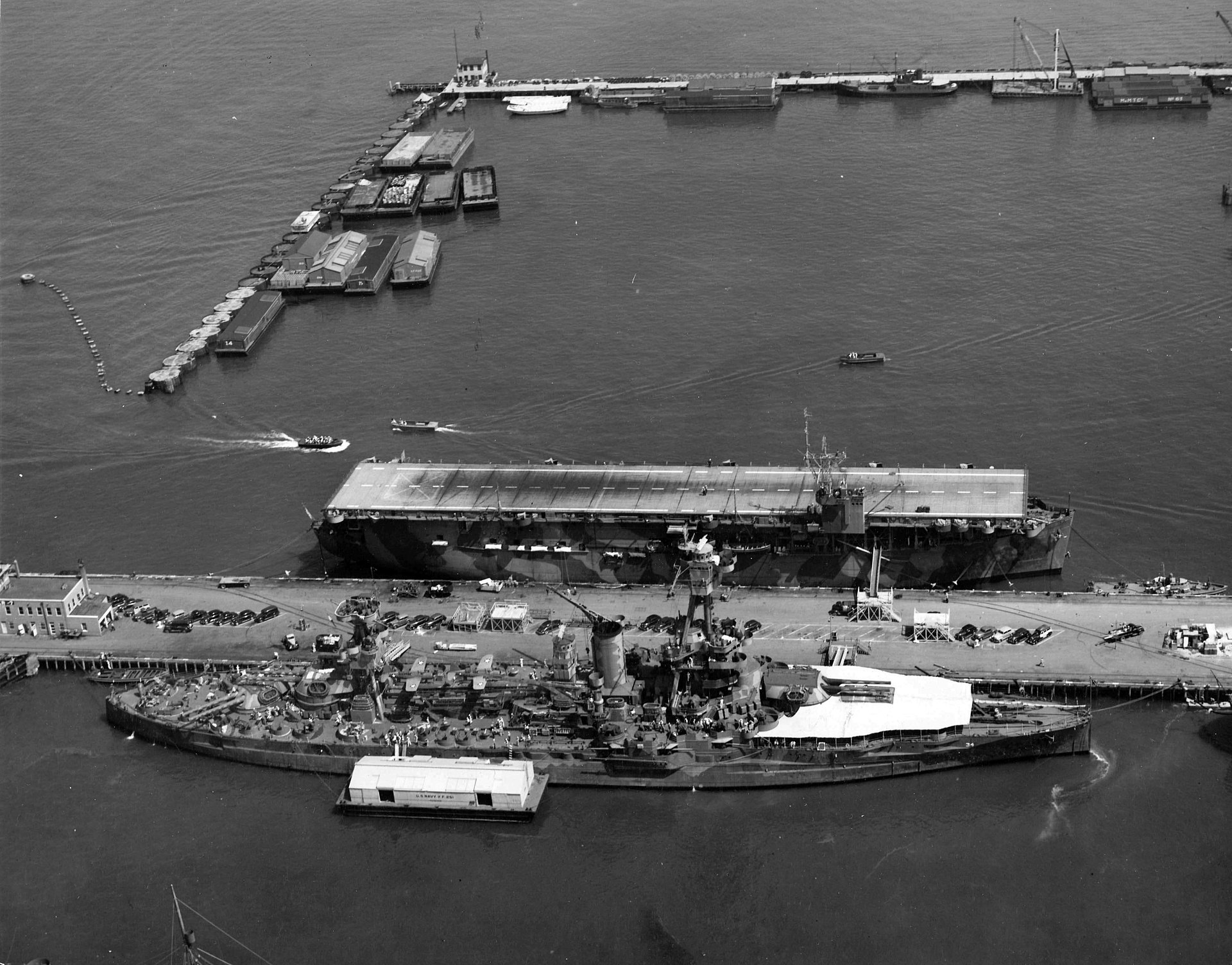
Norfolk Naval Shipyard (NNSY) in Portsmouth, Virginia has operated continuously since 1767 — one of the oldest naval ship repair facilities in the country. The yard performed ship construction, overhaul, dry-dock repair, and fleet maintenance on destroyers, aircraft carriers, submarines, and surface vessels across generations of federal contracts.
During World War II, NNSY reportedly ran at maximum capacity with tens of thousands of civilian tradespeople and naval personnel working simultaneously. Post-war decades brought sustained overhaul and repair work that kept the workforce in near-constant contact with asbestos-insulated pipe systems, boilers, and machinery. Workers were allegedly exposed to asbestos-containing materials (ACMs) manufactured by Johns-Manville Corporation, Owens-Illinois, Babcock & Wilcox, Crane Co., and others throughout construction, overhaul, and repair of U.S. Navy vessels. Many of those workers — and family members who laundered their work clothes — have since been diagnosed with mesothelioma, asbestosis, and asbestos-related lung cancer.
VA evaluates asbestos claims individually. Veterans generally need evidence of in-service asbestos exposure, a current diagnosis, and a medical nexus between them.
Asbestos Products Allegedly Used at Norfolk Naval Shipyard
Navy specifications for ship construction and repair — particularly from the 1930s through the 1970s — reportedly required ACMs throughout virtually every vessel’s mechanical systems. Asbestos was specified because no other material matched its thermal and fire-resistant properties at the cost and scale the Navy required.
ACMs identified in shipyard operations include:
- Pipe covering and pipe insulation — Kaylo (Owens-Illinois), Thermobestos (Johns-Manville), and Aircell, applied over steam lines, fuel lines, and hydraulic systems throughout engine rooms and living quarters
- Block insulation — Kaylo blocks and products manufactured by Babcock & Wilcox and Combustion Engineering, used on boilers and high-temperature equipment
- Gaskets, packing, and valve seals — products allegedly supplied by Crane Co. (Cranite brand) and Armstrong World Industries for valves, flanges, and pump assemblies
- Refractory brick and cement — used in boiler fireboxes and furnace linings, products allegedly manufactured by Combustion Engineering
- Spray-applied fireproofing — Monokote and Zonolite (both W.R. Grace & Co.), applied to structural steel and confined spaces
- Asbestos-cement board and transite products — products manufactured by Georgia-Pacific, Celotex, and Johns-Manville affiliates, used for bulkheads and fire barriers
- Floor tile and deck adhesives — products manufactured by Armstrong World Industries, Georgia-Pacific, and Pabco, containing chrysotile asbestos
Manufacturers whose products are alleged to have been installed at NNSY:
- Johns-Manville Corporation — pipe insulation, transite products, gasket materials
- Owens-Illinois — Kaylo block insulation and pipe covering
- Babcock & Wilcox — boiler block insulation and refractory materials
- Combustion Engineering — block insulation and equipment-mounted ACMs
- Crane Co. — Cranite gaskets, packing, and valve products
- W.R. Grace & Co. — Monokote and Zonolite spray fireproofing
- Armstrong World Industries — floor tile, gaskets, and packing materials
- Owens Corning — pipe insulation and building products
- Georgia-Pacific — transite board and asbestos-cement products
- Celotex Corporation — insulation and asbestos-cement board
- Pabco — floor tile and roofing products
- Eagle-Picher — high-temperature insulation products
- Garlock Sealing Technologies — gaskets and mechanical seals
Who Was Most Exposed: Occupational Risk by Trade
Direct Installation and Removal Trades
Pipe laggers and heat/frost insulators — tasked with applying and stripping products like Kaylo and Thermobestos pipe insulation, laggers are reportedly among the most heavily exposed workers at any shipyard. They worked directly with ACMs all day, every day, cutting, fitting, and removing insulation in confined spaces with little or no ventilation.
Pipefitters and plumbers — cut, joined, and maintained pipe systems wrapped in asbestos insulation. Every time a fitting required access or a pipe run was cleared, they generated airborne fiber.
Boilermakers — worked inside boiler rooms and fireboxes where asbestos block insulation and refractory materials were present throughout. Boiler repair required chipping, grinding, and replacing material that shed fiber heavily when disturbed.
Concurrent and Secondary Exposure Trades
Electricians — worked alongside insulators in confined shipboard spaces. Fiber released during insulation removal and installation settled on every surface and circulated in shared air.
Welders — heat-generating work placed them adjacent to asbestos-insulated systems in spaces where inadequate ventilation concentrated fiber.
Painters and sandblasters — disturbed transite board surfaces and asbestos-containing coatings during preparation and repair work.
Carpenters and shipwrights — cut transite board and asbestos-cement products during construction and repair. Sawing transite generates respirable fiber immediately.
Laborers and helpers — swept, cleaned, and hauled debris from spaces where asbestos had been disturbed. Dry sweeping spread fiber rather than containing it.
Para-Occupational (Take-Home) Exposure
Family members of NNSY workers have been diagnosed with mesothelioma attributable to take-home exposure — breathing fibers embedded in work clothing brought home for laundering. Courts have recognized these claims in civilian shipyard litigation. Spouses and children who regularly handled or laundered contaminated work clothes may have viable legal claims.
When Exposure Was Highest: Peak Periods at NNSY
Asbestos exposure at Norfolk Naval Shipyard was reportedly ongoing from the 1930s through the early 1980s. Three work contexts generated the highest airborne fiber concentrations.
New Construction
New construction required installing fresh pipe insulation — Kaylo, Thermobestos, Aircell — along with gaskets and block insulation throughout a vessel. Dry-fitting and cutting generated dust, but intact product was somewhat less friable than aged material.
Overhaul and Dry-Dock Repair — Highest Risk
Overhaul created the most hazardous conditions. Vessels returning for repair or upgrade carried old, degraded insulation that had to be stripped before new material could be installed. Removing friable Kaylo, Thermobestos, Monokote, and Zonolite in confined engine rooms, boiler rooms, and pump rooms allegedly released fiber concentrations orders of magnitude higher than new installation work. Ships undergoing overhaul had no running ventilation systems to clear the air. Workers breathed those concentrations for full shifts, shift after shift.
Routine Maintenance and Patch Repairs
Even minor repairs disturbing existing insulation — cutting Kaylo blocks, patching Monokote, replacing gasket material — generated substantial dust in poorly ventilated spaces.
The Latency Factor
Mesothelioma and asbestos-related lung cancer typically appear 20 to 50 years after initial exposure. Workers exposed during NNSY’s peak activity in the 1950s, 1960s, and 1970s are receiving diagnoses right now. The federal maritime statute of limitations is three years from diagnosis — not three years from exposure. Claims from that era remain legally viable.
Regulatory Context: EPA and OSHA Oversight
EPA NESHAP Requirements
Under EPA National Emission Standards for Hazardous Air Pollutants (NESHAP), 40 C.F.R. Part 61, Subpart M, facilities disturbing regulated quantities of asbestos must:
- Submit advance notifications to state environmental agencies before renovation or demolition work
- Follow prescribed work practice standards during asbestos abatement
- Document all renovation and demolition activities involving ACMs — including Monokote, Zonolite, and transite products
NESHAP notifications for renovation and demolition at NNSY are part of the public regulatory record in Virginia, accessible through the Virginia Department of Environmental Quality (DEQ).
OSHA Maritime Standards
OSHA’s maritime asbestos standard, 29 C.F.R. § 1915.1001, establishes:
- Permissible exposure limits for asbestos in shipyard environments
- Respiratory protection requirements for workers handling Kaylo, Thermobestos, Monokote, and other ACMs
- Engineering controls and work practice standards
- Documentation and worker notification requirements
OSHA inspection records for federal facilities are publicly accessible through OSHA’s enforcement database. Attorneys investigating NNSY exposure histories routinely pull Virginia DEQ NESHAP notification files and OSHA enforcement records for specific time periods and work areas — particularly those involving pipe insulation removal and spray fireproofing abatement.
Asbestos-Related Diseases in Former NNSY Workers
Malignant Mesothelioma
VA evaluates asbestos claims individually. Veterans generally need evidence of in-service asbestos exposure, a current diagnosis, and a medical nexus between them.
Asbestosis
Asbestosis is progressive, irreversible scarring of lung tissue caused by accumulated asbestos fiber burden. Lung function declines over time and cannot be restored. Asbestosis also substantially elevates the risk of secondary lung cancer.
Asbestos-Related Lung Cancer
Workers who smoked face compounded risk — asbestos exposure allegedly acts synergistically with tobacco to multiply lung cancer risk substantially. Lung cancer claims are legally cognizable whether or not the worker also carries an asbestosis diagnosis.
Non-Malignant Pleural Disease
Pleural plaques and pleural effusion are recognized clinical markers of past asbestos exposure. These conditions warrant ongoing medical monitoring and can progress over time.
VA Benefits for Navy Veterans with Asbestos-Related Disease
VA evaluates asbestos claims individually. Veterans generally need evidence of in-service asbestos exposure, a current diagnosis, and a medical nexus between them.
VA evaluates asbestos claims individually. Veterans generally need evidence of in-service asbestos exposure, a current diagnosis, and a medical nexus between them.
VA evaluates asbestos claims individually. Veterans generally need evidence of in-service asbestos exposure, a current diagnosis, and a medical nexus between them.
- Service connection deemed established. Once a mesothelioma diagnosis is confirmed by a VA-approved physician, service connection is granted automatically.
- 100% disability rating. Veterans receive the highest disability rating available, triggering monthly compensation, full VA healthcare, and Dependency and Indemnity Compensation (DIC) for surviving spouses and dependents.
VA Benefits Have No Filing Deadline
Unlike civil litigation, VA disability claims have no statute of limitations. A Navy veteran diagnosed with mesothelioma, asbestosis, or asbestos-related lung cancer can file a VA claim at any time — regardless of when service ended or when exposure occurred. There is no deadline. File as early as possible, because VA compensation runs from the
For informational purposes only. Not legal advice. No attorney-client relationship is created by reading this page. © 2026 Rights Watch Media Group LLC — Disclaimer · Privacy · Terms · Copyright
Recent News & Developments
None of the live news results retrieved for this search cycle contain items directly pertaining to Norfolk Naval Shipyard (NNSY) in Portsmouth, Virginia, its NESHAP compliance records, or active asbestos abatement projects at the facility. The Norfolk-related stories in the current news feed address unrelated municipal matters such as license plate surveillance cameras in the City of Norfolk — a separate jurisdiction from the shipyard. Accordingly, this section draws on verified regulatory history and the broader policy landscape that directly governs veterans and civilian workers with asbestos exposure at NNSY.
VA Claims and Benefits Landscape
VA evaluates asbestos claims individually. Veterans generally need evidence of in-service asbestos exposure, a current diagnosis, and a medical nexus between them.
Environmental and Regulatory Status
NNSY is one of the oldest continuously operating naval shipyards in the United States and has been subject to ongoing environmental remediation under the Defense Environmental Restoration Program. Portions of the facility have carried CERCLA-related designations, and the shipyard has filed NESHAP notifications with the EPA as required under 40 CFR Part 61, Subpart M, when asbestos-containing materials are disturbed during renovation or demolition of older structures and vessel overhaul work. Workers and their attorneys seeking facility-specific NESHAP notification records may submit requests directly to EPA Region 3 or through FOIA channels directed to the Department of the Navy.
Trust Fund and Litigation Context
Dozens of manufacturers whose insulation, gasket, and packing products were installed at NNSY have resolved liability through Chapter 11 bankruptcy trusts. Trust administrators periodically adjust payment percentages and documentary requirements; claimants with latent diseases diagnosed years after initial exposure should confirm current payment levels with qualified asbestos litigation counsel before filing.
Civilian and military workers at this shipyard who were diagnosed with mesothelioma, lung cancer, or asbestosis may have legal rights under federal maritime law and applicable state statutes. Multiple asbestos trust funds hold assets specifically for shipyard workers and their families.