Why Former Electric Boat Groton Workers Are Filing Navy Asbestos Exposure Claims Now
Workers who built nuclear submarines at Electric Boat’s Groton, Connecticut facility are now receiving diagnoses of mesothelioma, lung cancer, and asbestosis. These diseases take 20 to 50 years to develop after asbestos exposure ends. If you worked at Groton during new construction, overhaul, or maintenance operations from the 1940s through the 1980s, you likely encountered asbestos-containing materials in nearly every submarine compartment. Navy veteran mesothelioma cases among Electric Boat workers appear consistently in federal maritime litigation and VA benefits records.
You may have legal claims against the manufacturers who supplied those materials—but filing deadlines are urgent. The federal maritime statute of limitations for civil suits is strictly 3 years from diagnosis under 46 U.S.C. § 30106. Act immediately upon receiving a diagnosis. A maritime asbestos attorney can evaluate your eligibility for civil lawsuits, mesothelioma VA benefits, and asbestos trust fund claims simultaneously—these remedies are not mutually exclusive, and pursuing one does not forfeit another.
Electric Boat Groton: The Facility, the Submarines, and the Asbestos Hazard
What the Yard Built
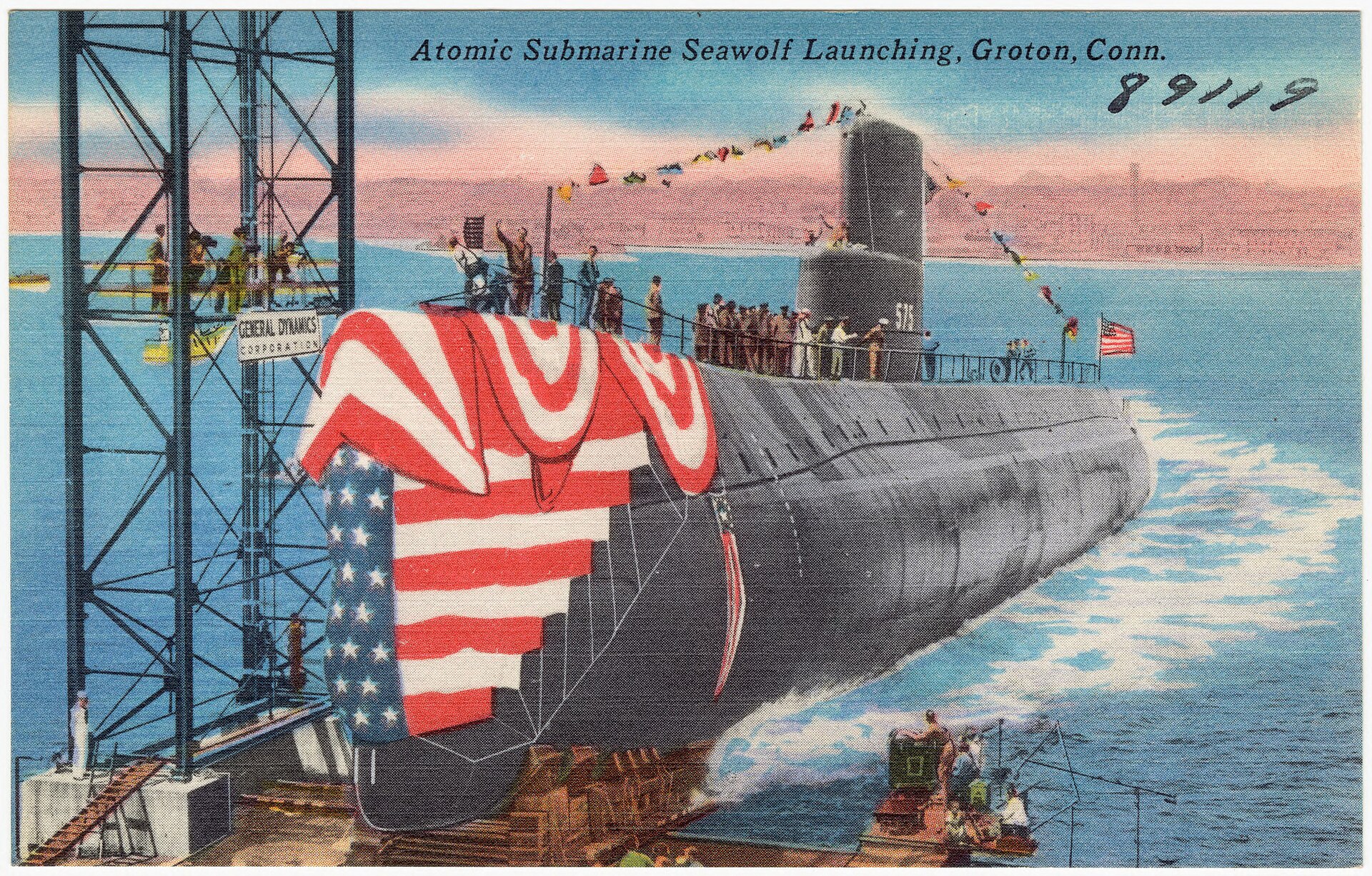
Electric Boat’s Groton yard—a General Dynamics division—sits on the Thames River and has operated continuously as a submarine construction facility since the early twentieth century. The yard built fleet submarines under wartime contracts and later secured contracts to construct the world’s first nuclear-powered submarines, including USS Nautilus (SSN-571), commissioned in 1954.
Groton workers constructed:
- Los Angeles-class fast-attack submarines
- Seawolf-class submarines
- Virginia-class submarines
- Polaris, Poseidon, and Trident ballistic missile submarines
The yard performed new construction, sea trials support, and periodic maintenance. At peak employment in the 1960s through the 1980s, Electric Boat’s Groton facility allegedly employed tens of thousands of tradespeople, many of whom are now pursuing Navy asbestos lawsuits or VA benefits for mesothelioma and related diseases.
Why Submarines Were Saturated With Asbestos
A nuclear submarine requires insulation capable of handling extreme heat and pressure fluctuations inside a hull engineered for deep-water diving. Every system needed thermal protection. Systems insulated with asbestos-containing materials included:
- Reactor compartments
- Steam lines and hot-water pipes
- Engine rooms
- Ballast tank spaces
- Crew berthing areas
- Propulsion system components
- Structural bulkheads
Asbestos was the dominant insulation material through approximately the mid-1970s. Johns-Manville, Owens-Illinois, Combustion Engineering, and other major manufacturers are alleged to have concealed internal knowledge of asbestos hazards while continuing to market their products without adequate warnings to shipyard workers or Navy personnel.
Asbestos-Containing Materials Used at Electric Boat Groton
Workers at Electric Boat Groton allegedly encountered asbestos in multiple forms across the full range of submarine construction trades:
Pipe covering and block insulation manufactured by Johns-Manville, Owens-Illinois (Kaylo brand), and Armstrong Cork covered nearly every steam and hot-water line aboard each submarine hull. Laggers and pipe insulators cut, sawed, and hand-fitted this material in confined reactor compartments and engine rooms with minimal ventilation. Fiber concentrations during this work were reportedly extraordinary by any modern standard.
Preformed pipe sections and molded insulation supplied by Owens Corning and W.R. Grace (Zonolite brand) required manual cutting and fitting that released asbestos fibers into enclosed spaces. Electricians and pipefitters disturbed these materials during routine work throughout each vessel’s construction.
Refractory brick, boiler packing, and thermal cement supplied by Babcock & Wilcox and Combustion Engineering (Cranite brand) went into propulsion system components and steam generation equipment. Boilermakers are alleged to have handled these materials extensively during both new construction and overhaul.
Thermal spray fireproofing—Monokote and Zonolite, both W.R. Grace products—was applied to structural bulkheads and compartment overheads during construction. These spray-applied materials were highly friable and generated heavy airborne dust during application and again during maintenance and overhaul disturbance years later.
Transite board and composite panels manufactured by Johns-Manville covered bulkheads and equipment enclosures throughout each vessel.
Rope packing, woven gaskets, and valve stem packing supplied by Crane Co. and other gasket manufacturers may have contained asbestos in valve assemblies throughout each submarine’s piping systems.
Deck tile adhesives and underlayment containing asbestos (Gold Bond brand products) were applied to crew compartment flooring and disturbed repeatedly during maintenance cycles by painters and surface workers.
Public litigation records reflect that Johns-Manville, Owens-Illinois, Combustion Engineering, Babcock & Wilcox, W.R. Grace, Armstrong Cork, Owens Corning, and Crane Co. supplied products to Groton. Many of these manufacturers are alleged to have possessed internal knowledge of asbestos hazards while withholding that information from the shipyard trades and the Navy.
Who Was Exposed: Trades and Work Phases
Trades With Direct Navy Asbestos Exposure
Heat and frost insulators and pipe laggers faced the most direct and sustained exposure. Their work required cutting, sawing, and hand-fitting preformed pipe covering and block insulation in submarine compartments. Industrial hygienists testifying in Navy asbestos litigation have described the resulting airborne fiber concentrations as extraordinarily high by modern standards. These workers allegedly handled Johns-Manville pipe covering, Owens-Illinois Kaylo, and Armstrong Cork products daily—breaking friable material in confined spaces with no dust collection and no respiratory protection. Veterans in these trades account for a disproportionate share of Navy veteran mesothelioma claims.
Pipefitters and plumbers worked alongside laggers during pipe system installation and stood in spaces where insulation sections were being broken, trimmed, or discarded. They installed and supported W.R. Grace Zonolite and Owens-Illinois products. Pipefitter exposure is well-documented in federal maritime asbestos litigation.
Boilermakers are alleged to have cut and fitted Combustion Engineering Cranite refractory material and handled Babcock & Wilcox boiler packing during fabrication and installation of propulsion system components. Boilermaker Navy asbestos exposure during submarine overhauls has generated substantial case law in the federal maritime courts.
Electricians and instrumentation technicians reportedly disturbed existing insulation when running conduit and wire through insulated spaces, generating secondary fiber release in confined quarters. Their work brought them into sustained contact with Johns-Manville and Owens-Illinois products along cable trays and equipment racks.
Welders and burners allegedly inhaled asbestos fibers dislodged by heat and vibration from nearby thermal work and from W.R. Grace Monokote spray fireproofing surrounding their weld points.
Painters and surface workers are alleged to have disturbed degraded asbestos-containing deck tile adhesives during surface preparation—work that was routine throughout each vessel’s maintenance cycle.
Machinists and carpenters performed precision work in spaces where Johns-Manville, Owens-Illinois, and Armstrong Cork insulation had been installed or was being stripped, sustaining bystander exposures in confined spaces over years of employment.
Laborers, helpers, and material handlers who swept workspaces, moved scrap insulation, or worked as general hands in insulated compartments experienced repeated bystander exposures. Materials broke during transport, releasing secondary dust from Owens Corning, W.R. Grace, and Johns-Manville products.
Work Phases That Generated the Highest Asbestos Fiber Concentrations
New construction: Workers cut and fitted fresh insulation—Johns-Manville pipe covering, Owens-Illinois Kaylo, and Armstrong Cork products—in confined spaces with limited air movement. Pipe laggers and insulators sustained the most intense exposures during this phase.
Overhaul and drydock operations: Removal of old, degraded insulation to access underlying systems for repair is alleged to have produced the highest airborne fiber concentrations of any work phase. Friable asbestos that had hardened, cracked, and deteriorated over years of service broke apart readily during removal, releasing fibers into enclosed compartments with limited air exchange. Removal of W.R. Grace Monokote and Zonolite spray products, Johns-Manville insulation, and Babcock & Wilcox refractory materials during overhaul generated uncontrolled dust clouds in some of the most confined spaces aboard a submarine. Overhaul work is consistently cited in Navy asbestos litigation as the exposure phase most strongly associated with subsequent disease.
Routine maintenance and repair: Secondary exposures occurred whenever workers disturbed insulated piping or structural materials throughout a vessel’s service life.
Overhaul periods during which Los Angeles-class and earlier Sturgeon-class submarines returned for mid-life refueling and systems upgrades are alleged to have been particularly hazardous. Workers removing Johns-Manville and Owens-Illinois insulation in reactor compartments and engine rooms during these periods reportedly had no meaningful respiratory protection for much of the 1950s through the early 1970s.
What Authorities Knew and When
OSHA Standards and Enforcement at Shipyards
OSHA established its first asbestos permissible exposure limit for general industry in 1972 and promulgated specific shipyard industry standards in subsequent years. Public OSHA inspection records for shipyard facilities from the 1970s and 1980s document widespread compliance failures across the industry, with citations covering exposure to products manufactured by Johns-Manville, Owens-Illinois, W.R. Grace, and other major suppliers.
Electric Boat’s Groton operations were reportedly subject to OSHA oversight during this regulatory transition. OSHA citations issued to comparable Navy shipyard contractors during this period establish that federal regulators possessed knowledge of asbestos hazards in submarine construction yards well before adequate protections reached the shop floor. Workers and families can request specific inspection records through the OSHA Freedom of Information Act process to support Navy asbestos exposure claims.
What Manufacturers of Submarine Insulation Knew and Allegedly Concealed
Internal corporate documents produced in asbestos litigation show that Johns-Manville, Owens-Illinois, Combustion Engineering, Babcock & Wilcox, and other manufacturers possessed detailed knowledge of asbestos hazards from at least the 1930s through the 1960s—decades before public disclosure. These manufacturers are alleged to have:
- Continued marketing products without adequate warnings to workers and end-users
- Suppressed medical research documenting asbestos health hazards
- Provided no meaningful guidance to shipyards on protecting workers during installation and removal of their products
- Failed to communicate known hazards to trade unions representing pipe laggers, insulators, and other workers in Navy submarine construction
These allegations form the legal foundation for Navy asbestos civil lawsuits and trust fund claims against these manufacturers.
EPA NESHAP Requirements and Federal Recognition of Shipyard Asbestos Hazards
The EPA’s National Emission Standards for Hazardous Air Pollutants under 40 C.F.R. Part 61 require notification before demolition or renovation activities that disturb regulated quantities of asbestos-containing material. These obligations applied to large shipyard operations as abatement programs developed, confirming that federal authorities recognized the hazard at facilities like Groton well before adequate worker protections were in place. EPA records further support Navy asbestos exposure claims by documenting that federal agencies understood the submarine construction asbestos problem and its scope.
Diseases That Develop After Navy Shipyard Asbestos Exposure
Latency: Why Navy Veteran Mesothelioma and Other Diagnoses Are Arriving Now
Asbestos-related diseases develop over latency periods of 20 to 50 years after initial exposure. Workers who left Electric Boat in the 1980s or early 1990s are receiving diagnoses today. Navy veteran mesothelioma, asbestosis, and lung cancer diagnoses in former Electric Boat workers are now appearing with high frequency in federal maritime courts, VA benefits systems, and asbestos trust fund records.
Mesothelioma
Pleural mesothelioma—cancer of the lining surrounding the lungs—is the signature asbestos disease and the one most frequently litigated in Navy asbestos cases
For informational purposes only. Not legal advice. No attorney-client relationship is created by reading this page. © 2026 Rights Watch Media Group LLC — Disclaimer · Privacy · Terms · Copyright
Recent News & Developments
Facility & Environmental News
General Dynamics Electric Boat (GDEB) in Groton, Connecticut remains one of the nation’s most active submarine construction and repair facilities, and its ongoing operations continue to generate regulatory attention relevant to asbestos-exposed workers. As reported by Mesothelioma.net (August 6, 2025), the Electric Boat shipyard has a well-documented history of asbestos use throughout its submarine construction programs, particularly during the Cold War era when insulation, pipe lagging, gaskets, and thermal materials containing asbestos were standard throughout the facility. Workers in trades including pipefitters, insulators, machinists, and welders faced routine exposure in confined submarine compartments where asbestos fibers had limited means of dispersal.
On the infrastructure front, Ocean News & Technology reported (July 12, 2024) that Bollinger Shipyards was contracted to build a state-of-the-art floating dry dock for GDEB, reflecting the facility’s continued expansion. Dry dock construction and renovation projects at active shipyards routinely trigger NESHAP (National Emission Standards for Hazardous Air Pollutants) notification requirements under 40 CFR Part 61, Subpart M, when legacy asbestos-containing materials are disturbed. Veterans and former civilian workers should be aware that ongoing abatement activity at facilities like GDEB may produce historical documentation useful in establishing occupational exposure timelines.
VA Claims & Regulatory Landscape
Veterans who served aboard submarines constructed or overhauled at Electric Boat may be eligible for VA disability compensation when evidence connects an asbestos-related condition to in-service exposure. Assignment records, occupational evidence, medical records, and a medical nexus opinion are central to establishing service connection.
Litigation & Trust Fund Activity
Dozens of asbestos product manufacturers whose materials were used extensively in submarine construction — including insulation and gasket suppliers — have established bankruptcy trust funds that remain open to claims from GDEB workers and their families. Payment tiers within these trusts are periodically adjusted, making timely filing important.
Civilian and military workers at this shipyard who were diagnosed with mesothelioma, lung cancer, or asbestosis may have legal rights under federal maritime law and applicable state statutes. Multiple asbestos trust funds hold assets specifically for shipyard workers and their families.