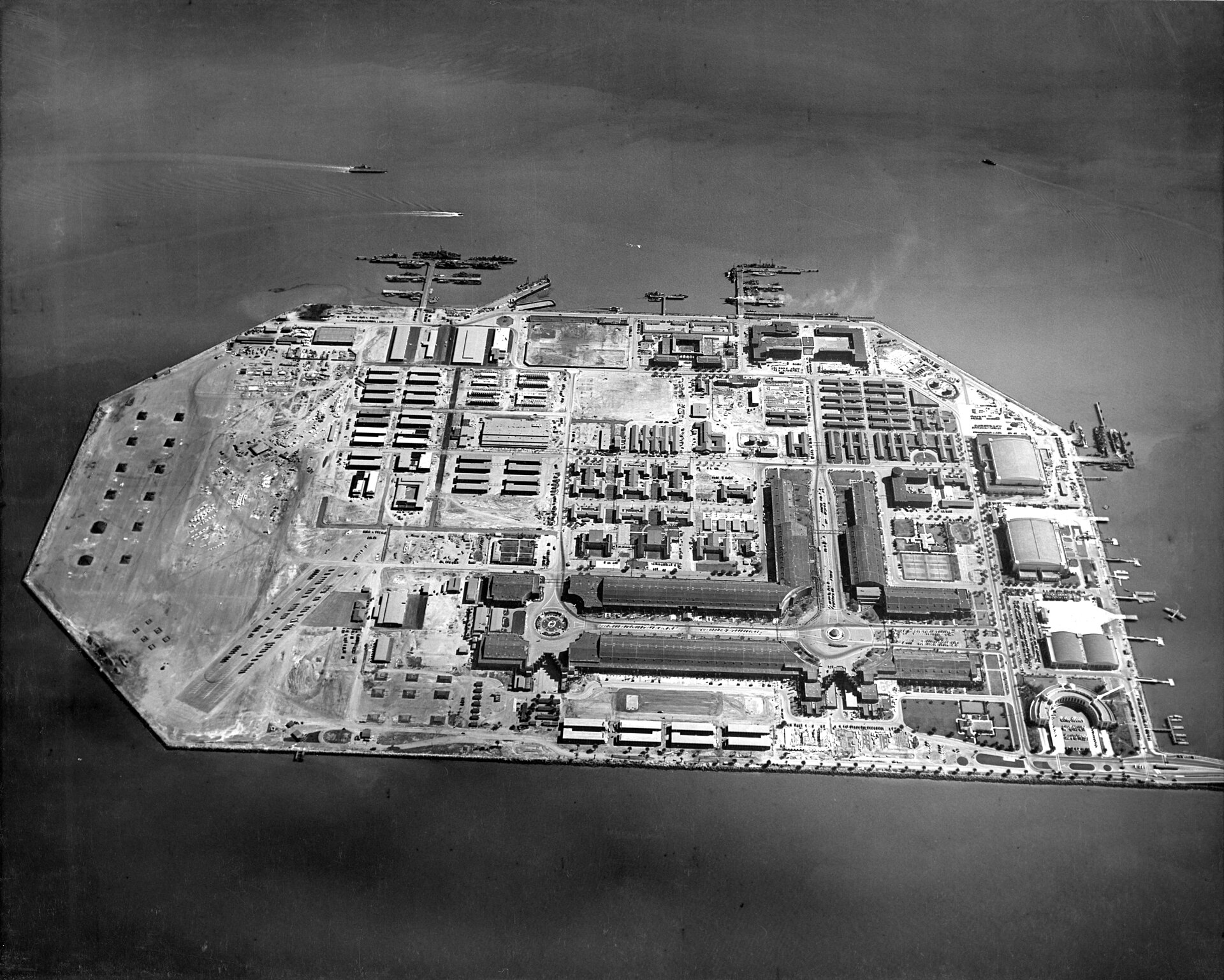
Naval Station Treasure Island (NSTI) occupied the man-made island in San Francisco Bay connected to Yerba Buena Island, California. Established in 1942 and operating through 1997, Treasure Island served as a major training, administrative, and logistics hub for the Pacific Fleet — home to the Naval School Command, a major Navy technical training facility, and a support base for carrier and surface ship operations in the San Francisco Bay area. Veterans, civilian DoD employees, and contractors who worked at NSTI during the asbestos era faced documented exposure to asbestos-containing materials throughout the installation’s facilities.
Naval Station Treasure Island: Documented Example
Veterans who served at Treasure Island and comparable installations have reported mesothelioma diagnoses decades after their service. These veterans are potentially eligible for VA disability benefits and may pursue civil claims and trust fund recovery:
- Barracks and berthing compartments: Floor tiles, ceiling tile, and pipe insulation in living quarters exposed sailors to airborne asbestos fibers during maintenance and renovation.
- Engine rooms and machinery spaces: Boiler block insulation, pipe lagging, and spray-on fireproofing exposed naval personnel and shipyard workers to asbestos dust during routine operations.
- Machine shops and pipe shops: Pipefitters, welders, and boilermakers on the base reportedly handled asbestos-insulated pipes, transite board, and gasket materials during ship repair operations.
- Steam tunnels and boiler plants: Base infrastructure maintenance workers may have been exposed to deteriorating insulation and disturbed dust in underground steam distribution systems.
If you were stationed at a Navy base and you’ve just been diagnosed with mesothelioma, two things are true right now: federal law gives you strong legal rights, and the clock is already running. Sailors, Marines, and civilian workers who lived and worked in base barracks, hangars, workshops, boiler plants, steam tunnels, and base housing at installations across the country—from Naval Station Treasure Island, California during World War II-era operations to shipyards in Norfolk, San Diego, Pearl Harbor, Bremerton, Jacksonville, and Charleston—were allegedly exposed to asbestos-containing materials (ACMs) on a daily basis. Pipe insulation in steam systems, boiler block insulation, vinyl asbestos floor tiles (VAT), ceiling tiles, spray-on fireproofing, roofing materials, and transite board were reportedly used throughout these facilities for decades. A maritime asbestos attorney can help you pursue every available legal claim federal law allows—simultaneously and without delay.
Filing Facts & Deadlines
VA Disability Benefits — No Deadline (VA asbestos-claim guidance)
- No Statute of Limitations: Veterans and surviving spouses may file for VA disability benefits at any time. There is no filing deadline. VA evaluates asbestos claims individually. Veterans generally need evidence of in-service asbestos exposure, a current diagnosis, and a medical nexus between them.
- Immediate Eligibility: Sailors and Marines reportedly exposed in engine rooms, berthing compartments, machinery spaces, and maintenance areas are potentially eligible upon diagnosis.
Civil Lawsuit Against Manufacturers — 3-Year Hard Deadline (46 U.S.C. § 30106)
- Three years from diagnosis. Under the federal maritime statute of limitations, 46 U.S.C. § 30106, missing this deadline permanently bars civil recovery against asbestos manufacturers and distributors—no exceptions, no extensions.
- Contact a maritime asbestos attorney immediately after diagnosis. Evidence preservation, witness identification, and venue selection all take time you cannot afford to waste.
VA and Civil Lawsuits Are Non-Exclusive — Pursue Both
- Dual recovery is legal and encouraged. VA disability benefits and civil lawsuit damages are entirely independent legal options. Receiving one does not reduce the other.
- VA benefits cover monthly disability compensation, full healthcare, and Dependency and Indemnity Compensation (DIC) for surviving spouses and dependents.
- Civil damages cover pain and suffering, emotional distress, lost wages, and loss of consortium—categories VA does not address.
- File both simultaneously. A coordinated legal strategy captures the maximum recovery across every available forum.
Asbestos Trust Fund Claims
- No strict statute of limitations in most trusts, but trust assets are depleting rapidly due to claim volume.
- Filing trust fund claims concurrently with VA and civil claims secures your position in the distribution queue before reserves are exhausted.
Why Speed Matters: The Urgency Behind Every Navy Asbestos Case
The three-year federal maritime deadline under 46 U.S.C. § 30106 runs from the date of diagnosis—not exposure. Beyond the legal deadline, delay creates compounding problems:
- Witnesses die. Fellow sailors, shipyard workers, and Navy supervisors who can document asbestos conditions at your duty station may not be available for deposition by the time your case reaches that stage.
- Records disappear. Navy personnel files, ship maintenance logs, base facility records, and EPA NESHAP notifications become harder to locate with each passing year.
- Trust funds shrink. Asbestos trusts are paying claims at unprecedented rates. Early filing secures priority.
- Medical documentation degrades in evidentiary value. Contemporaneous diagnosis records are far more persuasive than reconstructed histories.
Contact a Navy asbestos attorney the day you receive your diagnosis.
Civilian Workers on Navy Bases: LHWCA and Civil Recovery
Plumbers, pipefitters, boilermakers, electricians, and HVAC workers employed on Department of Defense contracts at Navy bases nationwide were routinely exposed to ACMs in the same facilities as military personnel. Claim pathways for civilian workers include:
- Longshore and Harbor Workers’ Compensation Act (LHWCA), 33 U.S.C. § 901: Federal workers’ compensation for employees injured at shipyards, naval facilities, and maritime workplaces.
- State Workers’ Compensation: Civilian base employees may have additional access to state-level workers’ comp depending on the jurisdiction.
- Civil Lawsuits Against Manufacturers: Civilian workers may sue asbestos product manufacturers under maritime tort law on the same legal theories available to veterans.
- Asbestos Trust Fund Claims: Civilian workers allegedly exposed on Navy bases are eligible to file claims against trusts established by bankrupt asbestos manufacturers.
A maritime asbestos attorney experienced in both federal and state workers’ compensation law can identify which pathways apply and ensure proper filing before any applicable deadline.
Federal Maritime Venue Strategy
Navy asbestos exposure lawsuits are filed in federal district courts. Veterans may file in their home district or in districts with substantial naval asbestos dockets, providing strategic flexibility on forum selection:
- Eastern District of Virginia (Norfolk): Primary venue for claims involving Naval Station Norfolk—the world’s largest naval base—and Norfolk Naval Shipyard.
- Southern District of Texas (Houston): Manages extensive maritime dockets, including claims tied to naval shipyard and repair facility operations.
- Western District of Washington (Tacoma): Significant caseload from Puget Sound Naval Shipyard and Bremerton-area operations.
- Southern District of California (San Diego): Covers Naval Base San Diego, Naval Station Treasure Island, and other West Coast facilities with documented ACM use.
- District of Hawaii (Honolulu): Handles claims arising from Pearl Harbor naval installations.
- District of South Carolina (Charleston): Covers Naval Station Charleston and Southeastern installations.
Maritime asbestos attorneys represent Navy veterans in all 50 states. VA asbestos claims are filed federally with the Veterans Benefits Administration regardless of where a veteran lives. Civil lawsuits may be filed in the veteran’s home federal district or in a district with a favorable naval asbestos docket. Veterans do not need a local attorney—national maritime firms handle these cases from diagnosis through resolution.
Navy-Specific Asbestos Trust Funds
Veterans and civilian workers may pursue a legal claim from trusts established by bankrupt manufacturers that allegedly supplied asbestos-containing products to Navy shipyards, naval bases, and vessel construction and repair facilities:
- Johns-Manville Trust: Reportedly one of the largest asbestos trusts; supplied pipe insulation and building materials to naval facilities.
- Combustion Engineering Trust: Supplied boiler and steam system components with asbestos insulation to Navy vessels and base facilities.
- Babcock & Wilcox Trust: Manufactured boiler equipment and insulation materials reportedly used extensively in Navy steam plants.
- W.R. Grace Trust: Supplied spray-on fireproofing materials allegedly used in naval facilities during the World War II and Cold War eras.
- Owens-Illinois Trust: Supplied asbestos-containing floor tiles and thermal insulation products to Navy bases.
- Crane Co. Trust: Supplied pipe fittings, valves, and insulation to naval shipyards and vessels.
- Garlock Sealing Technologies Trust: Supplied gasket and seal products containing asbestos reportedly used in naval machinery.
Trust fund distributions are independent of VA benefits and civil litigation—all three streams may be pursued simultaneously.
How VA Disability Benefits Work in Practice
Under VA asbestos-claim guidance, Navy veterans diagnosed with mesothelioma, lung cancer, or other asbestos-related diseases are potentially eligible for VA disability benefits without establishing direct service connection:
- Medical nexus required. Rating and assignment records can support exposure, while medical evidence must connect the current disease to that in-service exposure.
- Monthly disability compensation: Tax-free monthly payments scaled to disability rating (10% to 100%).
- Full VA healthcare: Coverage for all service-connected conditions.
- DIC for dependents: Surviving spouses and children receive monthly benefits if the veteran dies from an asbestos-related disease.
- No filing deadline: Veterans may file decades after separation; benefits are retroactive to the filing date.
Why Civil Litigation Remains Essential Alongside VA Benefits
VA disability benefits, as valuable as they are, do not compensate for pain and suffering, emotional distress, lost wages, or loss of consortium. Those damages are recoverable only through civil settlement or judgment against asbestos manufacturers—companies that were reportedly aware of the health risks of asbestos decades before they disclosed those risks to the sailors and workers using their products.
Holding manufacturers accountable through litigation serves both the individual veteran and every Navy family that comes after. A maritime asbestos attorney coordinates VA, civil, and trust fund claims to ensure no deadline is missed and no recovery source is left on the table.
Naval Station Treasure Island: A Documented Example
Naval Station Treasure Island, California served as a major naval facility and ship repair yard throughout World War II and the Cold War. Public records and EPA NESHAP notifications document alleged asbestos-containing material use throughout the installation, including:
- Barracks and berthing compartments: Floor tiles, ceiling tiles, and pipe insulation in living quarters allegedly exposed sailors to airborne asbestos fibers during maintenance and renovation.
- Engine rooms and machinery spaces: Boiler block insulation, pipe lagging, and spray-on fireproofing reportedly exposed naval personnel and shipyard workers to concentrated asbestos dust during routine operations.
- Machine shops and pipe shops: Pipefitters, welders, and boilermakers on the base reportedly handled asbestos-insulated pipes, transite board, and gasket materials during ship repair operations.
- Steam tunnels and boiler plants: Base infrastructure maintenance workers may have been exposed to deteriorating insulation and disturbed dust in underground steam distribution systems.
Veterans who served at Treasure Island and comparable installations have reported mesothelioma diagnoses decades after their service. These veterans are potentially eligible for VA disability benefits and may pursue civil claims and trust fund recovery through a maritime asbestos attorney.
Immediate Action Plan
- Document your service. Gather your DD-214, naval service records, and duty station assignments.
- Obtain a formal diagnosis. Mesothelioma, lung cancer, or other asbestos-related conditions must be confirmed by an oncologist or pulmonologist before claims are filed.
- Preserve evidence. Collect photographs, facility records, witness contact information, or any documentation of asbestos conditions at your duty station.
- Contact a maritime asbestos attorney. National firms handling Navy asbestos cases offer free consultations and represent veterans across all 50 states.
- File your VA claim immediately. The VA disability benefits process can run concurrently with civil and trust fund claim preparation.
- Meet the 3-year civil deadline. Under 46 U.S.C. § 30106, your civil lawsuit must be filed within three years of diagnosis—there are no exceptions.
Get Your Free Case Review Today
Whether you were stationed at Treasure Island, Norfolk, San Diego, Pearl Harbor, Bremerton, Jacksonville, Charleston, or any other Navy installation, federal law provides a clear path to a legal claim—VA disability benefits with no filing deadline, civil damages against the manufacturers who put asbestos into those facilities, and trust fund distributions that operate independently of both. The only variable is whether you act before the three-year federal maritime deadline closes the door on civil recovery.
Call a maritime asbestos attorney today for a free, no-obligation case review—and let a legal team with decades of Navy asbestos experience fight for every dollar you’ve earned.
For informational purposes only. Not legal advice. No attorney-client relationship is created by reading this page. © 2026 Rights Watch Media Group LLC — Disclaimer · Privacy · Terms · Copyright