Read the video transcript
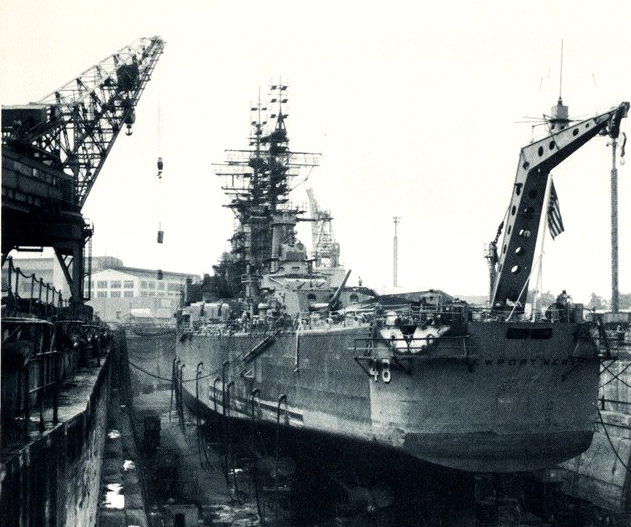
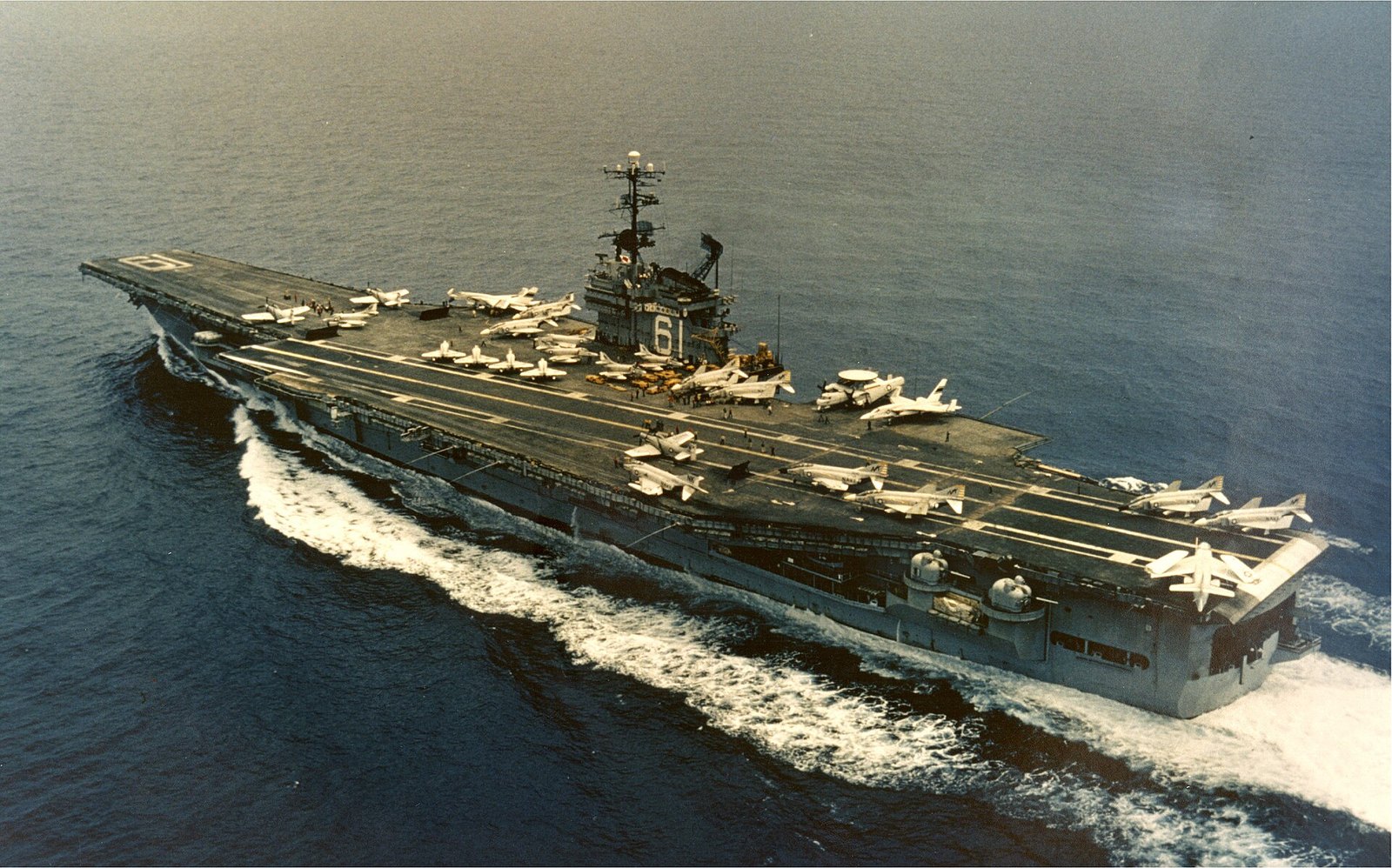
Did you serve aboard the USS Ranger? This aircraft carrier carried asbestos in nearly every compartment. Here is where it was, and who is responsible. The USS Ranger, hull number CV-61, was an aircraft carrier, built by Newport News Shipbuilding and Drydock Co. and commissioned in 1957. She served through Pacific Fleet operations, and Vietnam War. Public naval references list this equipment aboard the USS Ranger, CV-61 — insulated and sealed with asbestos. Each shipyard overhaul and major repair meant asbestos insulation was torn out and replaced — peak-exposure work for the yard workers and the crew aboard. Exposure was worst in the engineering spaces, where the snipes worked — but asbestos lined the whole ship, so all hands were exposed. The companies that made the asbestos equipment aboard — not the Navy — are who asbestos claims are brought against. According to asbestos litigation records, the equipment aboard the USS Ranger from makers such as Foster Wheeler allegedly contained asbestos. If you served aboard the USS Ranger and were later diagnosed with mesothelioma, asbestosis, or another asbestos-related disease, you may have a legal claim against the companies that made the asbestos products used aboard your ship. This is educational information from an independent publisher — not a law firm — and is not legal advice.
USS Ranger (CV-61) was a Forrestal-class aircraft carrier commissioned 10 August 1957 and decommissioned 10 July 1993, serving 36 years including multiple Vietnam War combat deployments and Cold War deployments in the Pacific Fleet. Built at Newport News Shipbuilding and Drydock Company, she spent most of her career homeported at NAS Alameda, California. The equipment manifest below was assembled from depositions, expert reports, and manufacturer interrogatory responses filed in U.S. asbestos litigation referencing equipment installed aboard.
Four West Coast Yard Periods
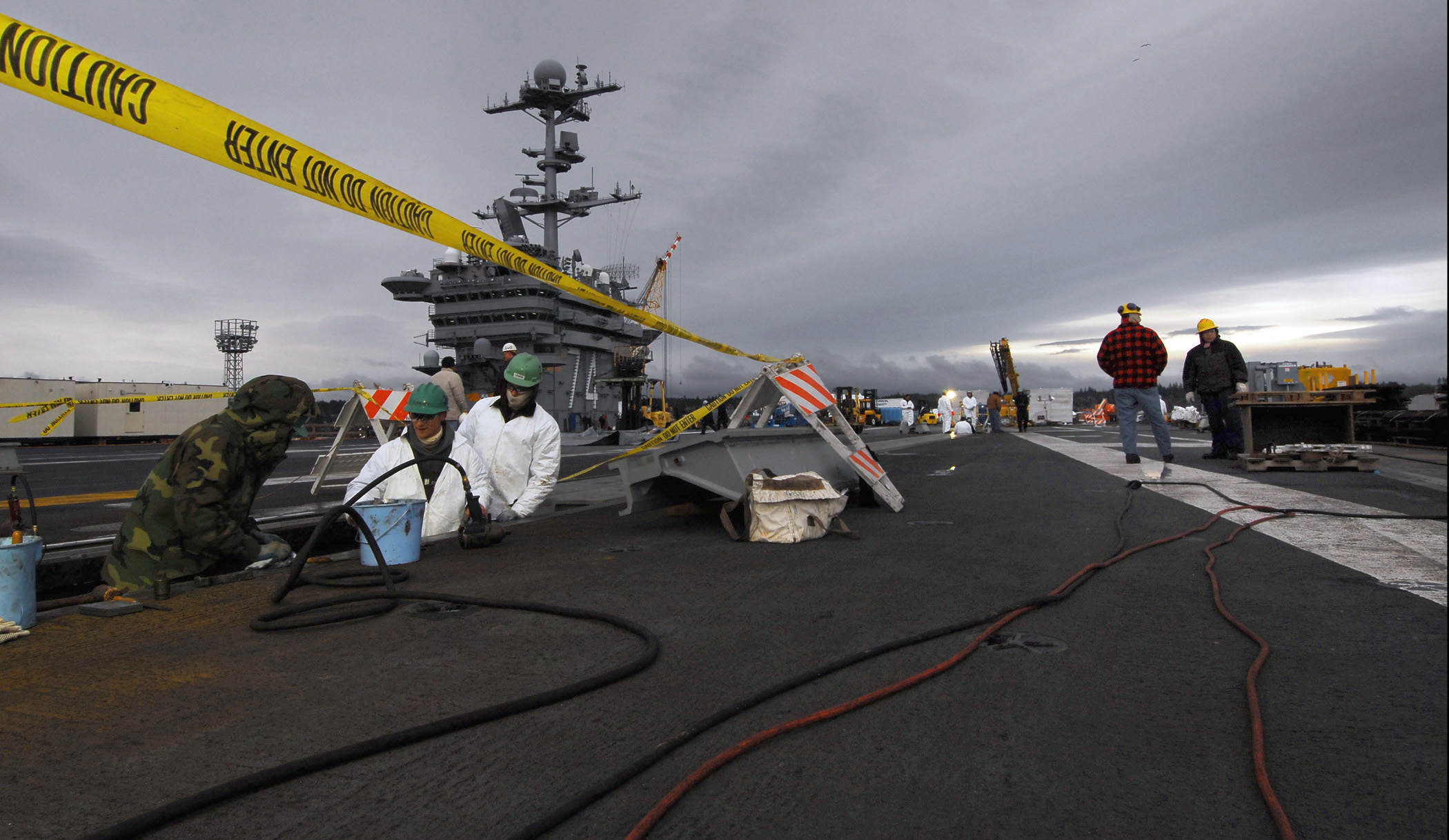
A crew account on this page describes being in drydock in Bremerton, Washington, with asbestos signs all over the ship. Her service record names the yard periods that account sits inside:
| Yard | When | Type |
|---|---|---|
| San Francisco Naval Shipyard | 1963–1964 | overhaul |
| San Francisco Naval Shipyard | 1965 | overhaul |
| Puget Sound Naval Shipyard (Bremerton) | 1966–1967 | overhaul |
| Puget Sound Naval Shipyard (Bremerton) | 1968 | shipyard availability |
Bremerton is Puget Sound Naval Shipyard, so that sailor’s recollection and the written record describe the same place. Four yard periods in six years is the pattern that matters for a carrier’s engineering crew: overhaul is when lagging comes off and goes back on, and the men living aboard are inside it while it happens.
One more entry from her record belongs here. On 13 April 1965 a fuel line fire broke out in No. 1 main machinery room, killing one man. A fire in a main machinery space is followed by repair work in exactly the compartment where a carrier’s insulation is densest.
Equipment Manifest
| Equipment | Manufacturer | Qty | Notes |
|---|---|---|---|
| Boilers | Foster Wheeler | FW Products aboard USS Ranger (CVA 61) prior to 1975 | |
| Soot Blowers | Foster Wheeler | FW Products aboard USS Ranger (CVA 61) prior to 1975 | |
| Bottom Blow Valves | Foster Wheeler | FW Products aboard USS Ranger (CVA 61) prior to 1975 | |
| Safety Valves | Foster Wheeler | FW Products aboard USS Ranger (CVA 61) prior to 1975 | |
| Condensers | Foster Wheeler | FW Products aboard USS Ranger (CVA 61) prior to 1975 | |
| Forged-steel gate, globe & check valves and steam traps | Velan | Hull-specific record: Velan US Navy Reference List documents Velan forged-steel valves and steam traps as standard equipment across the Forrestal-class carriers (CV-59 Forrestal, CV-60 Saratoga, CV-61 Ranger, CV-62 Independence) and on Enterprise (CVN-65), Nimitz (CVN-68) and Eisenhower (CVN-69). | |
| Marine surface condensers, air ejectors & anchor windlass | C.H. Wheeler | Hull-specific record: documented for USS Ranger (CVA-61), Forrestal-class (Newport News-built). | |
| Resilient flight-deck covering (U.S. Navy-specified) | Selby, Battersby & Co. | Hull-specific record: Selby, Battersby installed the Navy-specified resilient flight-deck covering on USS Ranger (CVA-61). |
Note: this manifest is derived from public asbestos litigation records (depositions, expert reports, manufacturer interrogatories) rather than primary BUSHIPS construction documents. Entries reflect what has been documented or alleged in publicly filed legal records.
VA Benefits for Ranger Veterans
USS Ranger (CV-61) veterans with mesothelioma, asbestos-related lung cancer, asbestosis, or pleural disease may qualify for VA disability compensation when evidence shows in-service asbestos exposure, a current diagnosis, and a medical link between them. The expert report, Westinghouse specification documentation, and multi-ship litigation record establish Ranger’s asbestos exposure pathway for engineering, damage control, and maintenance ratings.
Free, confidential case evaluation: Speak with O’Brien Law Firm — (314) 237-6461
All consultations are free. No fee unless a financial recovery is made on your behalf.
Documented asbestos records derived from publicly filed asbestos litigation including expert testimony, PE engineer reports, Westinghouse specification documentation, and corrected ship records specific to USS Ranger (CV-61). This does not constitute legal or medical advice.
The asbestos-containing products documented on U.S. Navy vessels and at shipyards are catalogued by manufacturer on AsbestosIndex. These records cross-reference which companies supplied which materials and to which facilities.
Navy Ratings Most Exposed to Asbestos Aboard Ranger
The U.S. Department of Veterans Affairs and the public asbestos litigation record document that the following Navy ratings worked routinely in spaces where ACM was installed, maintained, ripped out, and replaced:
VA Disability Claims for Asbestos-Related Disease
The U.S. Department of Veterans Affairs evaluates asbestos claims individually. A veteran generally needs medical evidence of a current asbestos-related disease, service evidence supporting in-service asbestos exposure, and a medical opinion connecting the two. Ship assignments, Navy ratings, and equipment records can help document the exposure history but do not create automatic service connection.
Approved claims may provide monthly disability compensation and related benefits. Survivors may separately qualify for Dependency & Indemnity Compensation when the applicable requirements are met. Civil lawsuits and asbestos-trust claims use different standards; claimants should obtain individualized advice about how the processes interact.
How to file a VA disability claim: VA claims are filed directly with the U.S. Department of Veterans Affairs — not with a law firm. Start at VA.gov › Hazardous Materials Exposure, call 1‑800‑827‑1000, or get free help filing from a Veterans Service Organization: DAV, VFW, or American Legion.
VA Claims Guide on This Site › Compare: VA vs. Civil Lawsuit
Source notes: equipment-manifest entries (where shown) are sourced from public-record BUSHIPS (Bureau of Ships) documentation, NARA archives, and the public asbestos litigation record. Manufacturer attributions link to documented asbestos-product histories on AsbestosIndex.com where available. Nothing on this page constitutes medical or legal advice.