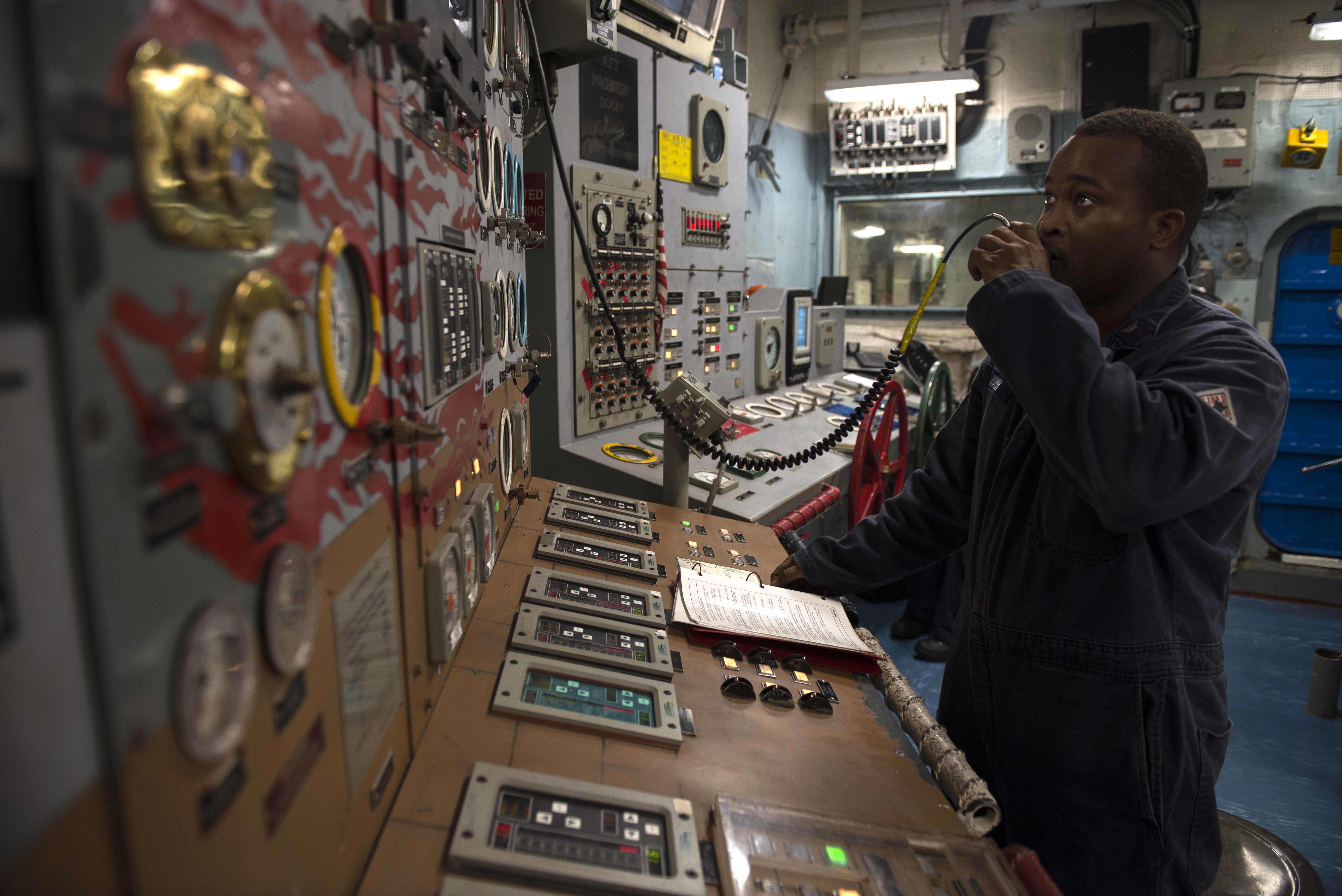
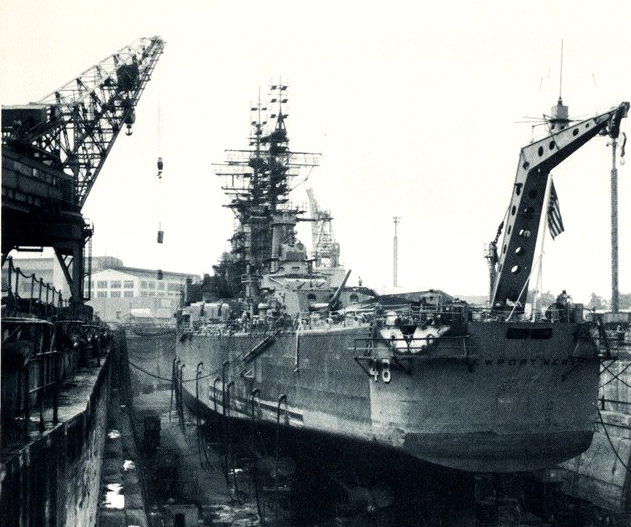
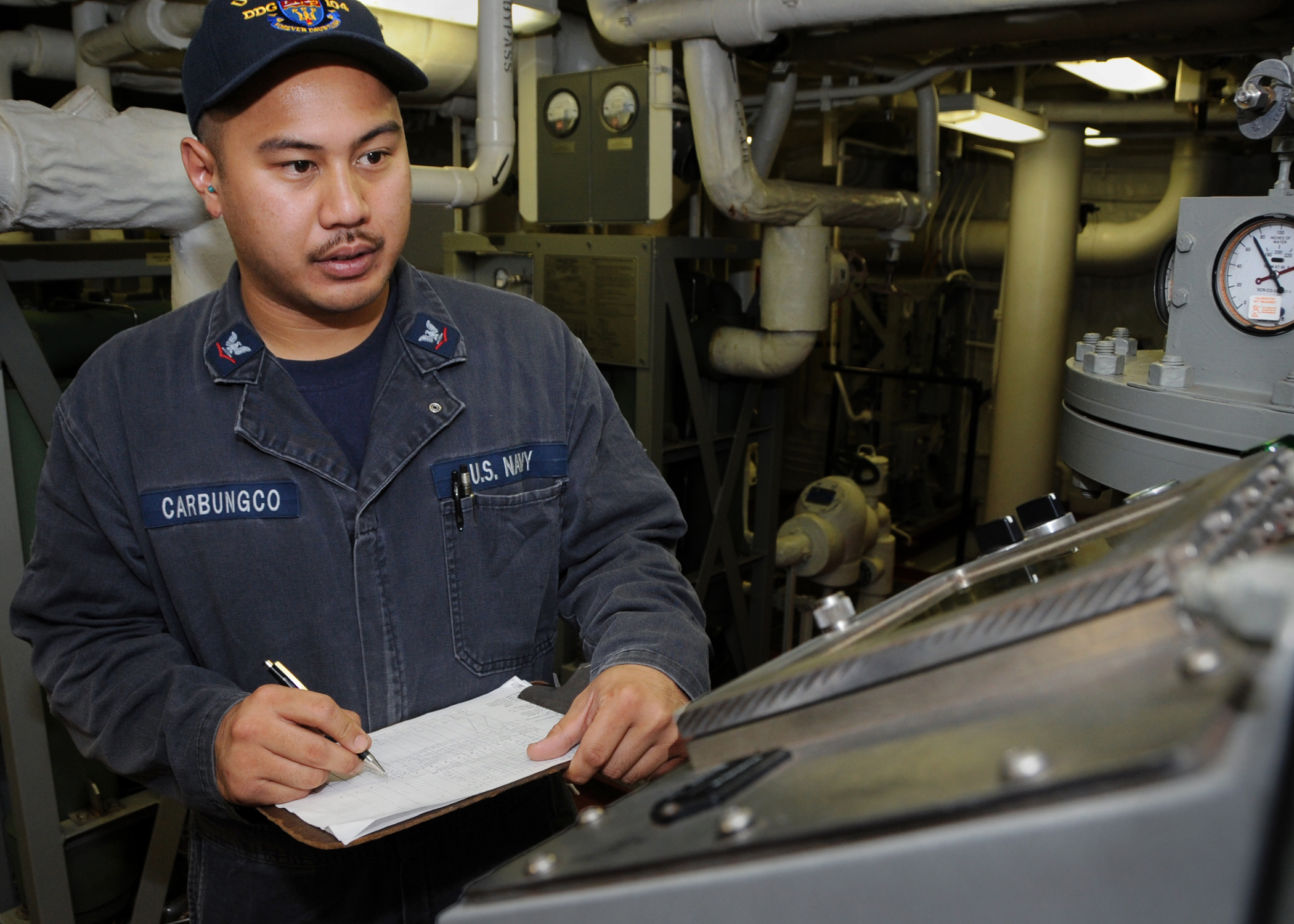
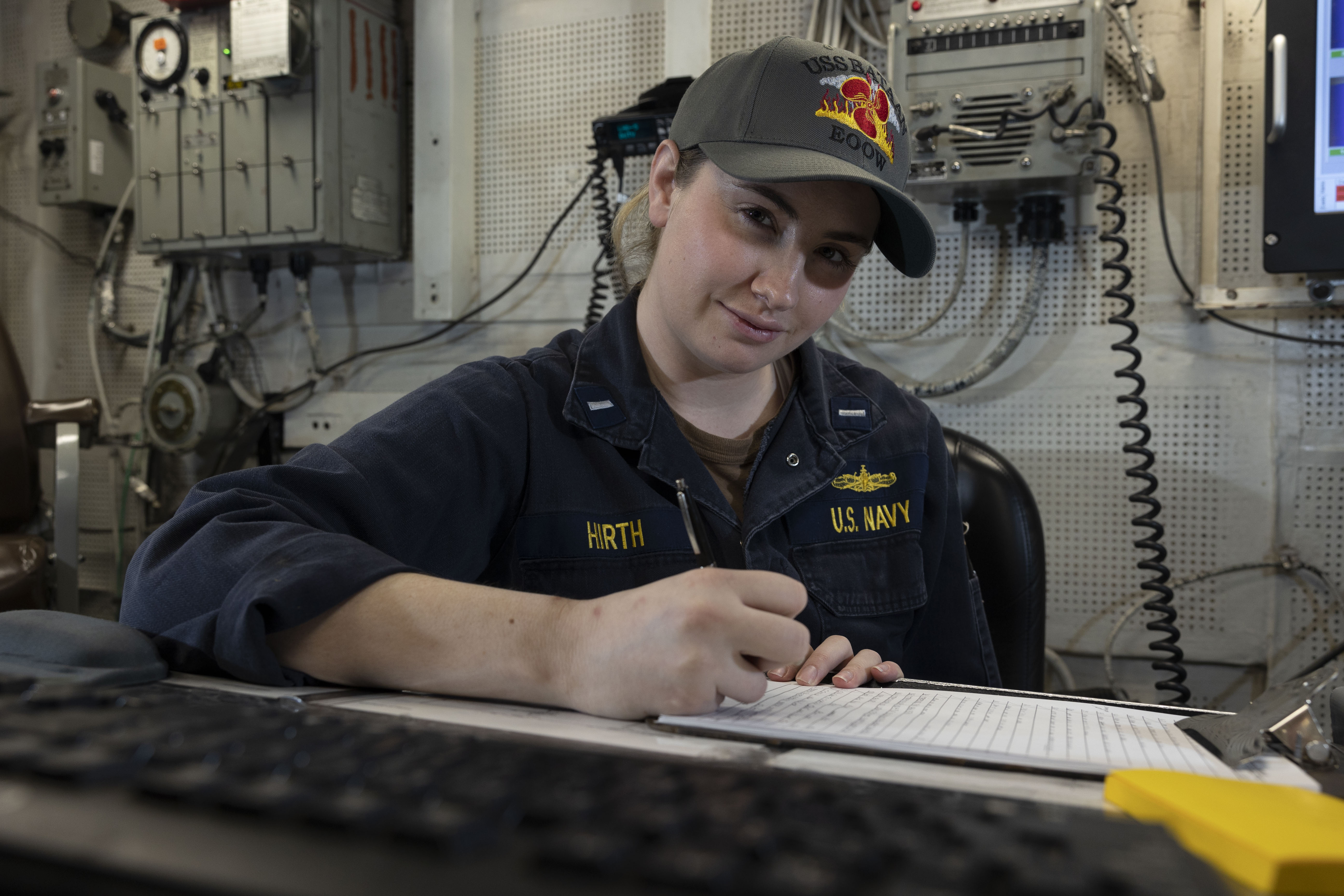
The Leahy class guided missile cruisers — CG-16 through CG-24, originally commissioned as destroyer leaders (DLG) and reclassified as cruisers (CG) in 1975 — were among the largest Cold War surface combatants in the US Navy. Built between 1960 and 1964 at Bath Iron Works, Puget Sound Bridge and Dry Dock, San Francisco Naval Shipyard, and Todd Shipyards (San Pedro), the Leahy class used high-pressure steam turbines with General Electric plants and Babcock & Wilcox boilers. Their engineering spaces may have contained asbestos insulation identical in scope to contemporaneous destroyers, while their larger hull size meant more total insulation surface area and more engineering spaces with asbestos-containing materials.
Steam Plant and Asbestos in Leahy Engineering Spaces
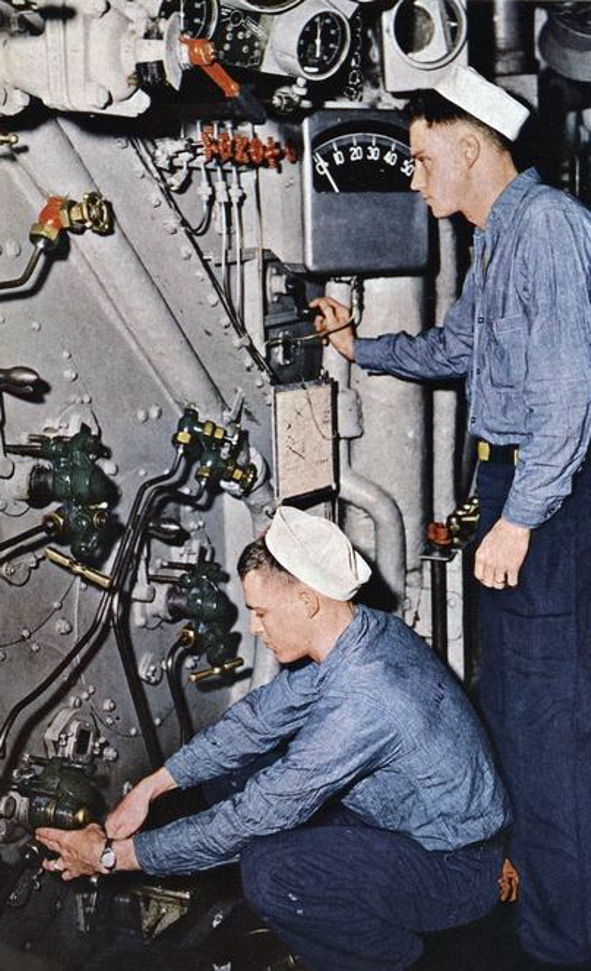
Leahy class cruisers used the same 1,200 PSI / 950°F steam plants as the contemporaneous Forrest Sherman destroyers, requiring comprehensive asbestos insulation throughout the engineering plant:
- Two boiler rooms with four B&W boilers each insulated with asbestos block and sectional covering on casings, steam drums, superheater sections, and uptakes
- Two main engine rooms with GE steam turbines covered with asbestos block insulation on turbine casings and exhaust connections
- High-pressure main steam piping running from boilers to turbines covered with asbestos block lagging and lagging cloth
- Auxiliary machinery in engineering spaces including feedwater heaters, deaerators, and auxiliary turbines — all with asbestos insulation on high-temperature surfaces
- Interior ship construction throughout the larger cruiser hull in berthing, habitability, and working spaces using asbestos floor tile, overhead lagging, and bulkhead insulation
Reclassification and Long Service Life
Leahy class ships served from the early 1960s through the late 1980s and early 1990s — a service life spanning three decades during which original asbestos insulation aged and degraded. Sailors who served aboard Leahy class cruisers throughout the Cold War era, including those assigned during Vietnam-era deployments and later anti-submarine warfare operations, were present in engineering spaces where aging asbestos insulation had become increasingly friable over time.
Class Hull Roll
The Leahy class included USS Leahy (CG-16), USS Harry E. Yarnell (CG-17), USS Worden (CG-18), USS Dale (CG-19), USS Richmond K. Turner (CG-20), USS Gridley (CG-21), USS England (CG-22), USS Halsey (CG-23), and USS Reeves (CG-24).
VA Claims for Leahy Class Veterans
VA evaluates asbestos-related disability claims on a case-by-case basis. Veterans generally need evidence of in-service asbestos exposure, a current asbestos-related diagnosis, and a medical link between them. Veterans who served in engineering or other ratings aboard Leahy class cruisers before the vessels’ decommissioning and have since been diagnosed with mesothelioma, asbestosis, or asbestos-related lung cancer may qualify for VA disability benefits. DD-214 records identifying a CG-16 through CG-24 hull number as a duty station document the qualifying ship assignment.
The asbestos-containing products documented on U.S. Navy vessels and at shipyards are catalogued by manufacturer on AsbestosIndex. These records cross-reference which companies supplied which materials and to which facilities.
Navy Ratings Most Exposed to Asbestos Aboard Leahy Class (CG/DLG)
The U.S. Department of Veterans Affairs and the public asbestos litigation record document that the following Navy ratings worked routinely in spaces where ACM was installed, maintained, ripped out, and replaced:
VA Disability Claims for Asbestos-Related Disease
The U.S. Department of Veterans Affairs evaluates asbestos claims individually. A veteran generally needs medical evidence of a current asbestos-related disease, service evidence supporting in-service asbestos exposure, and a medical opinion connecting the two. Ship assignments, Navy ratings, and equipment records can help document the exposure history but do not create automatic service connection.
Approved claims may provide monthly disability compensation and related benefits. Survivors may separately qualify for Dependency & Indemnity Compensation when the applicable requirements are met. Civil lawsuits and asbestos-trust claims use different standards; claimants should obtain individualized advice about how the processes interact.
How to file a VA disability claim: VA claims are filed directly with the U.S. Department of Veterans Affairs — not with a law firm. Start at VA.gov › Hazardous Materials Exposure, call 1‑800‑827‑1000, or get free help filing from a Veterans Service Organization: DAV, VFW, or American Legion.
VA Claims Guide on This Site › Compare: VA vs. Civil Lawsuit
Source notes: equipment-manifest entries (where shown) are sourced from public-record BUSHIPS (Bureau of Ships) documentation, NARA archives, and the public asbestos litigation record. Manufacturer attributions link to documented asbestos-product histories on AsbestosIndex.com where available. Nothing on this page constitutes medical or legal advice.