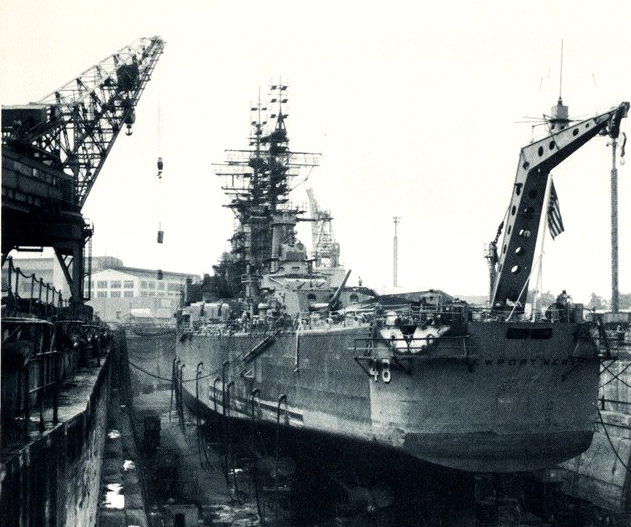
The Gearing class destroyers — 98 hulls (DD-710 through DD-890, non-consecutive) built between 1944 and 1951 at Bath Iron Works, Bethlehem Steel, Federal Shipbuilding, Consolidated Steel, and other wartime and postwar yards — were an enlarged and improved version of the Fletcher class design with the same General Electric steam turbine propulsion arrangement. Gearing class destroyers used GE turbines delivering 60,000 shaft horsepower with two Babcock & Wilcox boilers, requiring the same comprehensive asbestos insulation in engineering spaces as the contemporaneous Fletcher class. The Gearing class is notable as the most extensively FRAM-modernized destroyer class in the postwar fleet, with 79 hulls receiving FRAM I or FRAM II upgrades extending their service into the 1970s with original WWII-era asbestos-insulated propulsion plants.
Steam Propulsion Plant and Asbestos
Gearing class destroyers were equipped with the same GE/B&W steam plant as Fletcher class destroyers, with the same comprehensive asbestos insulation requirements throughout the engineering spaces:
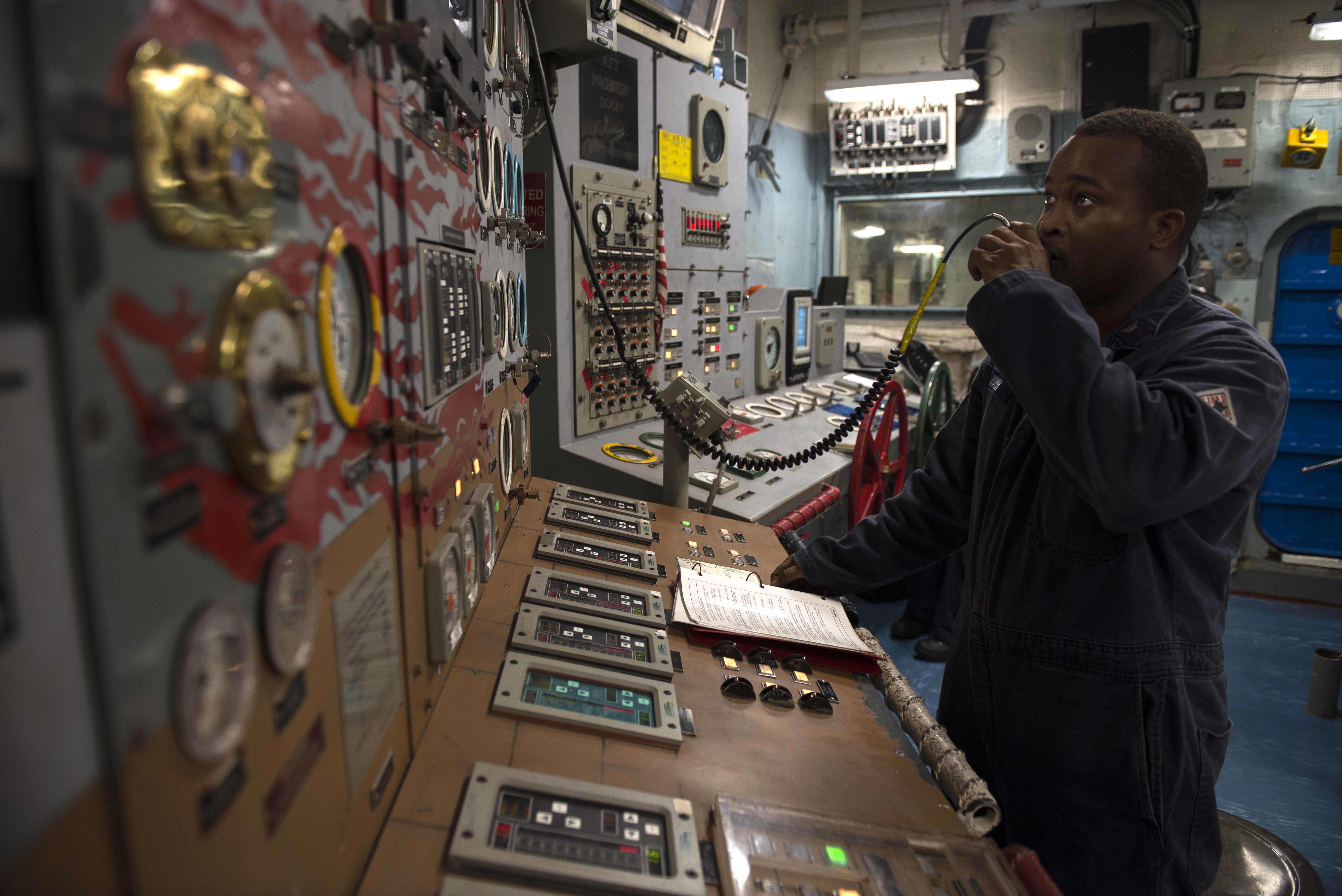
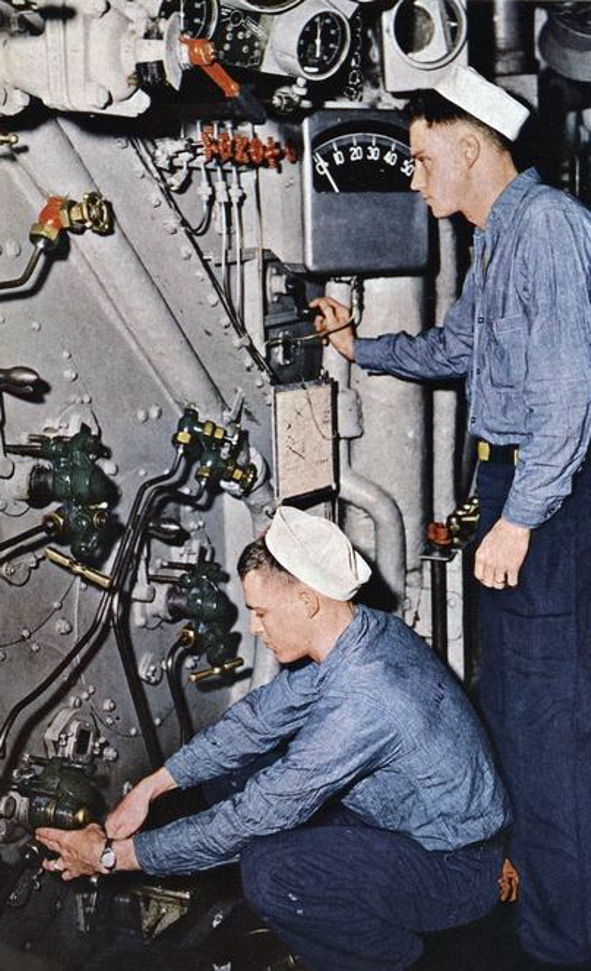
- Two B&W boilers in two firerooms — asbestos block, sectional covering, and cement on boiler casings, steam drums, superheater sections, and uptakes operating at 600 PSI / 850°F
- GE main propulsion turbine sets in two engine rooms — asbestos block insulation on turbine casings and high-temperature exhaust connections
- Main steam piping from firerooms to engine rooms — asbestos block lagging and lagging cloth on the 600 PSI steam runs throughout the engineering spaces
- Auxiliary machinery — feedwater heaters, deaerators, and auxiliary turbines with asbestos insulation on all high-temperature surfaces in the engineering spaces
FRAM Modernization and Extended Service Life
The Fleet Rehabilitation and Modernization (FRAM) program of the early 1960s extended Gearing class service by upgrading antisubmarine warfare systems and living accommodations while retaining the original WWII-era steam propulsion plant. FRAM I upgrades added ASROC, the drone antisubmarine helicopter (DASH) system, and NIXIE torpedo countermeasures while retaining original boilers and steam turbines. FRAM II upgrades were more limited. Both FRAM variants left the original asbestos-insulated propulsion plant in place:
- FRAM I modernization involved significant shipyard overhaul work in which insulators worked on existing asbestos-insulated steam piping and equipment — creating exposure for ship’s company personnel present during the shipyard availability
- FRAM II modernization similarly involved shipyard periods with insulation work on the existing steam plant
- Post-FRAM service through the 1960s and 1970s placed successive crews aboard vessels with the original 1940s asbestos insulation aging and degrading for decades
Foreign Military Sales
Many Gearing class destroyers were transferred to allied navies under Foreign Military Sales — Greece, Turkey, Taiwan, South Korea, Pakistan, and others received Gearing class hulls. US Navy veterans who served aboard Gearing class destroyers before their transfer accumulated asbestos exposure from the original WWII-era construction.
Gearing-Class Ships — Individual Exposure Pages
Each Gearing-class ship below has its own service-history and shipboard asbestos-exposure page:
- USS English (DD-696)
- USS Charles S Sperry (DD-697)
- USS Ault (DD-698)
- USS Gearing (DD-710)
- USS Eugene A Greene (DD-711)
- USS Gyatt (DD-712)
- USS Kenneth D Bailey (DD-713)
- USS William R Rush (DD-714)
- USS William M Wood (DD-715)
- USS Wiltsie (DD-716)
- USS Theodore E Chandler (DD-717)
- USS Hamner (DD-718)
- USS Epperson (DD-719)
- USS Frank Knox (DD-742)
- USS Southerland (DD-743)
- USS Rowan (DD-782)
- USS Gurke (DD-783)
- USS Henderson (DD-785)
- USS Richard B Anderson (DD-786)
- USS James E Kyes (DD-787)
- USS Hollister (DD-788)
- USS Eversole (DD-789)
- USS Shelton (DD-790)
- USS Seaman (DD-791)
- USS Cassin Young (DD-793)
- USS Chevalier (DD-805)
- USS Higbee (DD-806)
- USS Benner (DD-807)
- USS Dennis J Buckley (DD-808)
- USS Corry (DD-817)
- USS New (DD-818)
- USS Floyd B Parks (DD-819)
- USS John A Bole (DD-820)
- USS Robert H Mccard (DD-822)
- USS Samuel B Roberts (DD-823)
- USS Basilone (DD-824)
- USS Agerholm (DD-826)
- USS Robert A Owens (DD-827)
- USS Myles C Fox (DD-829)
- USS Power (DD-839)
- USS Glennon (DD-840)
- USS Noa (DD-841)
- USS Fiske (DD-842)
- USS Warrington (DD-843)
- USS Perry (DD-844)
- USS Fechteler (DD-870)
- USS Cony (DD-871)
- USS Forrest Royal (DD-872)
- USS Hawkins (DD-873)
- USS Duncan (DD-874)
- USS Henry W Tucker (DD-875)
- USS Rogers (DD-876)
- USS Perkins (DD-877)
- USS Vesole (DD-878)
- USS Leary (DD-879)
- USS Furse (DD-882)
VA Claims for Gearing Class Veterans
VA evaluates asbestos-related disability claims on a case-by-case basis. Veterans generally need evidence of in-service asbestos exposure, a current asbestos-related diagnosis, and a medical link between them. Veterans who served in engineering or other ratings aboard Gearing class destroyers (DD-710 through DD-890 series) before the vessels’ decommissioning and have since been diagnosed with mesothelioma, asbestosis, or asbestos-related lung cancer may qualify for VA disability benefits. DD-214 records identifying a Gearing class hull number as a duty station document the qualifying assignment.
The asbestos-containing products documented on U.S. Navy vessels and at shipyards are catalogued by manufacturer on AsbestosIndex. These records cross-reference which companies supplied which materials and to which facilities.
Navy Ratings Most Exposed to Asbestos Aboard Gearing Class (DD)
The U.S. Department of Veterans Affairs and the public asbestos litigation record document that the following Navy ratings worked routinely in spaces where ACM was installed, maintained, ripped out, and replaced:
VA Disability Claims for Asbestos-Related Disease
The U.S. Department of Veterans Affairs evaluates asbestos claims individually. A veteran generally needs medical evidence of a current asbestos-related disease, service evidence supporting in-service asbestos exposure, and a medical opinion connecting the two. Ship assignments, Navy ratings, and equipment records can help document the exposure history but do not create automatic service connection.
Approved claims may provide monthly disability compensation and related benefits. Survivors may separately qualify for Dependency & Indemnity Compensation when the applicable requirements are met. Civil lawsuits and asbestos-trust claims use different standards; claimants should obtain individualized advice about how the processes interact.
How to file a VA disability claim: VA claims are filed directly with the U.S. Department of Veterans Affairs — not with a law firm. Start at VA.gov › Hazardous Materials Exposure, call 1‑800‑827‑1000, or get free help filing from a Veterans Service Organization: DAV, VFW, or American Legion.
VA Claims Guide on This Site › Compare: VA vs. Civil Lawsuit
Source notes: equipment-manifest entries (where shown) are sourced from public-record BUSHIPS (Bureau of Ships) documentation, NARA archives, and the public asbestos litigation record. Manufacturer attributions link to documented asbestos-product histories on AsbestosIndex.com where available. Nothing on this page constitutes medical or legal advice.