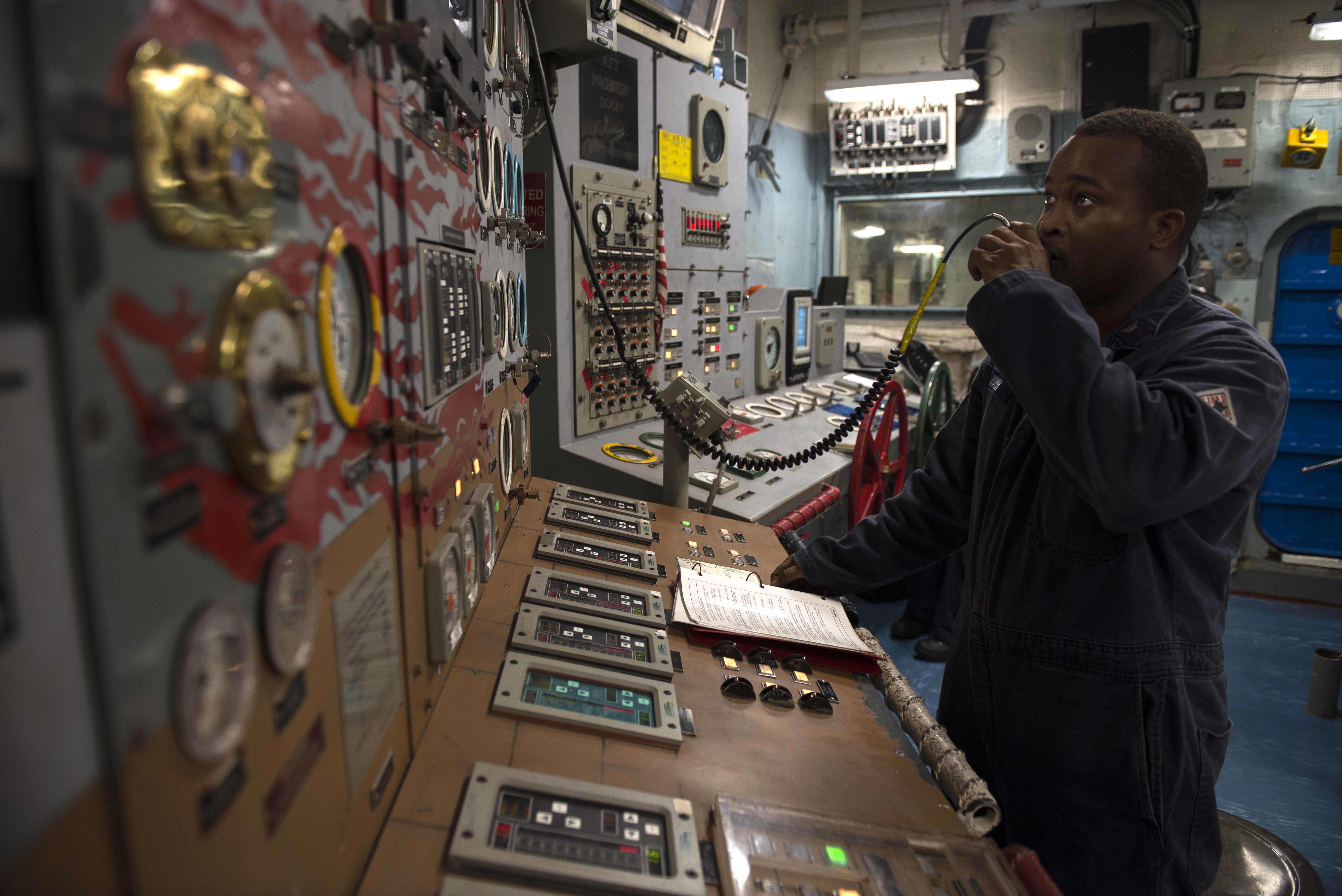
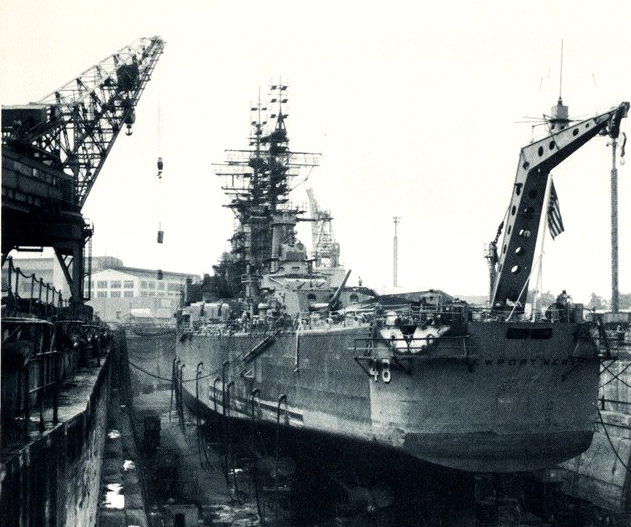
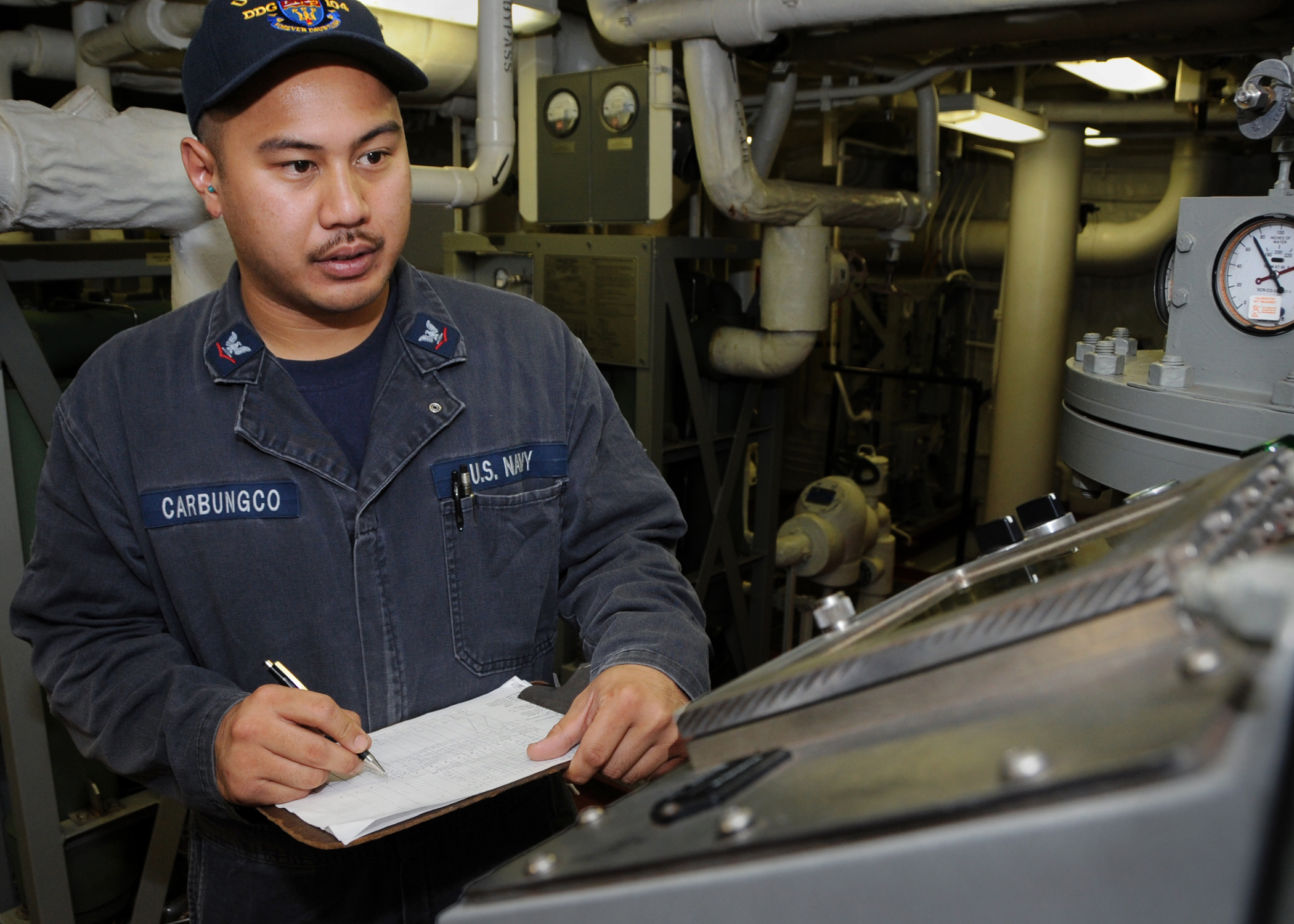
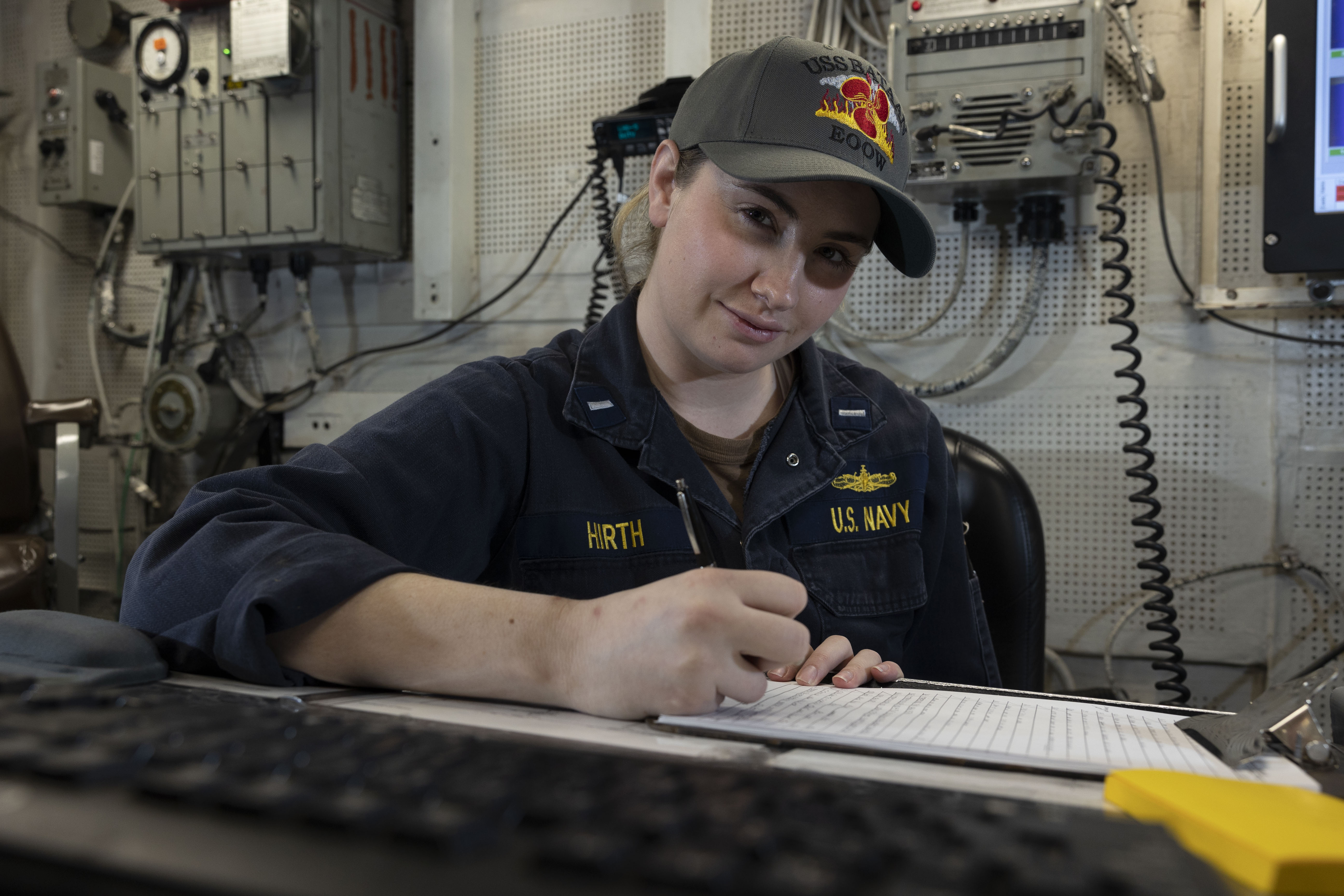
The Charles F. Adams class consisted of 23 guided missile destroyers (DDG-2 through DDG-24) commissioned between 1960 and 1964 at Bath Iron Works, Defoe Shipbuilding, and other yards. The Adams class was the Navy’s primary guided missile destroyer for two decades, serving as anti-air warfare escorts for carrier battle groups throughout the Vietnam era. The lead ship, USS Charles F. Adams (DDG-2), was commissioned in 1960 at Bath Iron Works in Bath, Maine. The Adams-class destroyers used conventional steam turbine propulsion — two boilers, two turbines — with asbestos insulation throughout the engineering plant consistent with the early 1960s construction standards.
Steam Plant Asbestos
Adams-class destroyers used steam turbine propulsion with asbestos insulation:
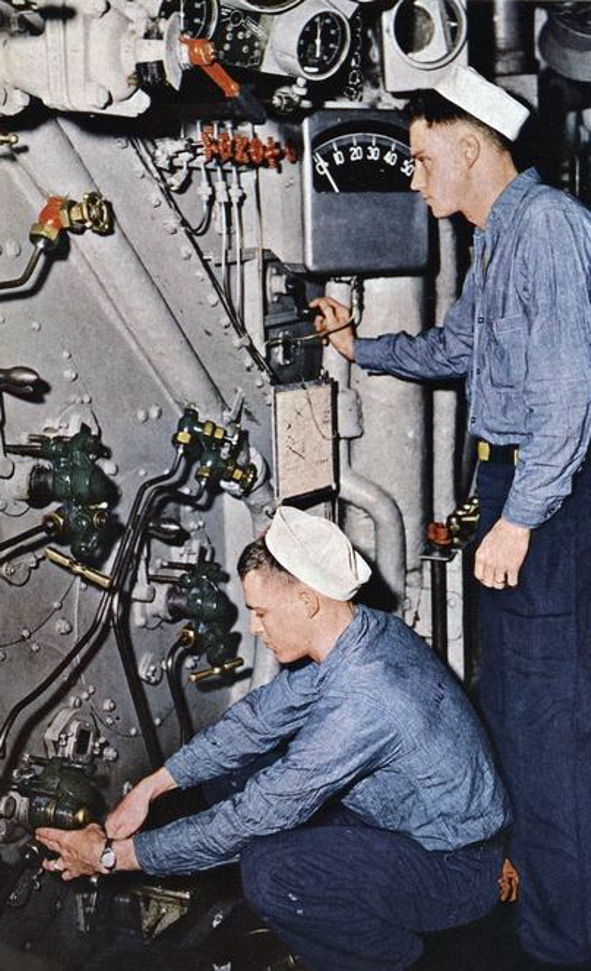
- Boiler plant — the two boilers aboard each Adams-class destroyer used asbestos boiler lagging on exterior surfaces, asbestos combustion chamber refractory brick, and asbestos packing at boiler access points. BT ratings on Adams-class destroyers operated in the confined fireroom spaces with the asbestos-containing boiler as the dominant heat source and asbestos exposure source
- Main steam piping — the steam distribution piping in the Adams-class fireroom and engineroom used asbestos magnesia pipe covering on the main steam, extraction steam, and auxiliary steam piping runs. In the confined engineering spaces of these 437-foot destroyers, the steam piping was overhead and along the bulkheads throughout the space, with deteriorating pipe covering releasing asbestos fiber into the confined engineering space atmosphere
- Engineering auxiliaries — boiler feed pumps, steam-driven air ejectors, and ship’s service turbine generators used asbestos-containing gasket and packing materials in routine maintenance by MM ratings
Adams-Class Ships
The 23 Adams-class destroyers served the fleet from 1960 through the 1990s:
- Charles F. Adams (DDG-2), John King (DDG-3), Lawrence (DDG-4), Claude V. Ricketts (DDG-5), Barney (DDG-6), Henry B. Wilson (DDG-7), Lynde McCormick (DDG-8), Towers (DDG-9), Sampson (DDG-10), Sellers (DDG-11), Robison (DDG-12), Hoel (DDG-13), Buchanan (DDG-14), Berkeley (DDG-15), Joseph Strauss (DDG-16), Conyngham (DDG-17), Semmes (DDG-18), Tattnall (DDG-19), Goldsborough (DDG-20), Cochrane (DDG-21), Benjamin Stoddert (DDG-22), Richard E. Byrd (DDG-23), Waddell (DDG-24)
VA Claims for Adams-Class Veterans
VA evaluates asbestos-related disability claims on a case-by-case basis. Veterans generally need evidence of in-service asbestos exposure, a current asbestos-related diagnosis, and a medical link between them. BT, MM, and engineering ratings who served aboard Charles F. Adams-class DDGs and have since been diagnosed with mesothelioma, asbestosis, or asbestos-related lung cancer may qualify for VA disability benefits.
The asbestos-containing products documented on U.S. Navy vessels and at shipyards are catalogued by manufacturer on AsbestosIndex. These records cross-reference which companies supplied which materials and to which facilities.
Navy Ratings Most Exposed to Asbestos Aboard Charles F. Adams-Class DDGs
The U.S. Department of Veterans Affairs and the public asbestos litigation record document that the following Navy ratings worked routinely in spaces where ACM was installed, maintained, ripped out, and replaced:
VA Disability Claims for Asbestos-Related Disease
The U.S. Department of Veterans Affairs evaluates asbestos claims individually. A veteran generally needs medical evidence of a current asbestos-related disease, service evidence supporting in-service asbestos exposure, and a medical opinion connecting the two. Ship assignments, Navy ratings, and equipment records can help document the exposure history but do not create automatic service connection.
Approved claims may provide monthly disability compensation and related benefits. Survivors may separately qualify for Dependency & Indemnity Compensation when the applicable requirements are met. Civil lawsuits and asbestos-trust claims use different standards; claimants should obtain individualized advice about how the processes interact.
How to file a VA disability claim: VA claims are filed directly with the U.S. Department of Veterans Affairs — not with a law firm. Start at VA.gov › Hazardous Materials Exposure, call 1‑800‑827‑1000, or get free help filing from a Veterans Service Organization: DAV, VFW, or American Legion.
VA Claims Guide on This Site › Compare: VA vs. Civil Lawsuit
Source notes: equipment-manifest entries (where shown) are sourced from public-record BUSHIPS (Bureau of Ships) documentation, NARA archives, and the public asbestos litigation record. Manufacturer attributions link to documented asbestos-product histories on AsbestosIndex.com where available. Nothing on this page constitutes medical or legal advice.