For Veterans, Service Members, and Civilian Workers
If you served at Naval Air Station Alameda and you’ve just been diagnosed with mesothelioma, asbestosis, or asbestos-related lung cancer, three separate recovery paths are available to you right now: VA presumptive benefits, civil litigation against the manufacturers who supplied asbestos-containing materials to the base, and asbestos trust fund claims. VA claims carry no statute of limitations — veterans and surviving spouses can file at any age. Civil actions can recover substantial damages, but federal maritime law imposes a strict three-year deadline running from your diagnosis date. This article identifies what you were exposed to, where the exposure occurred, and how to pursue both VA disability and civil mesothelioma compensation simultaneously.
What Naval Air Station Alameda Was
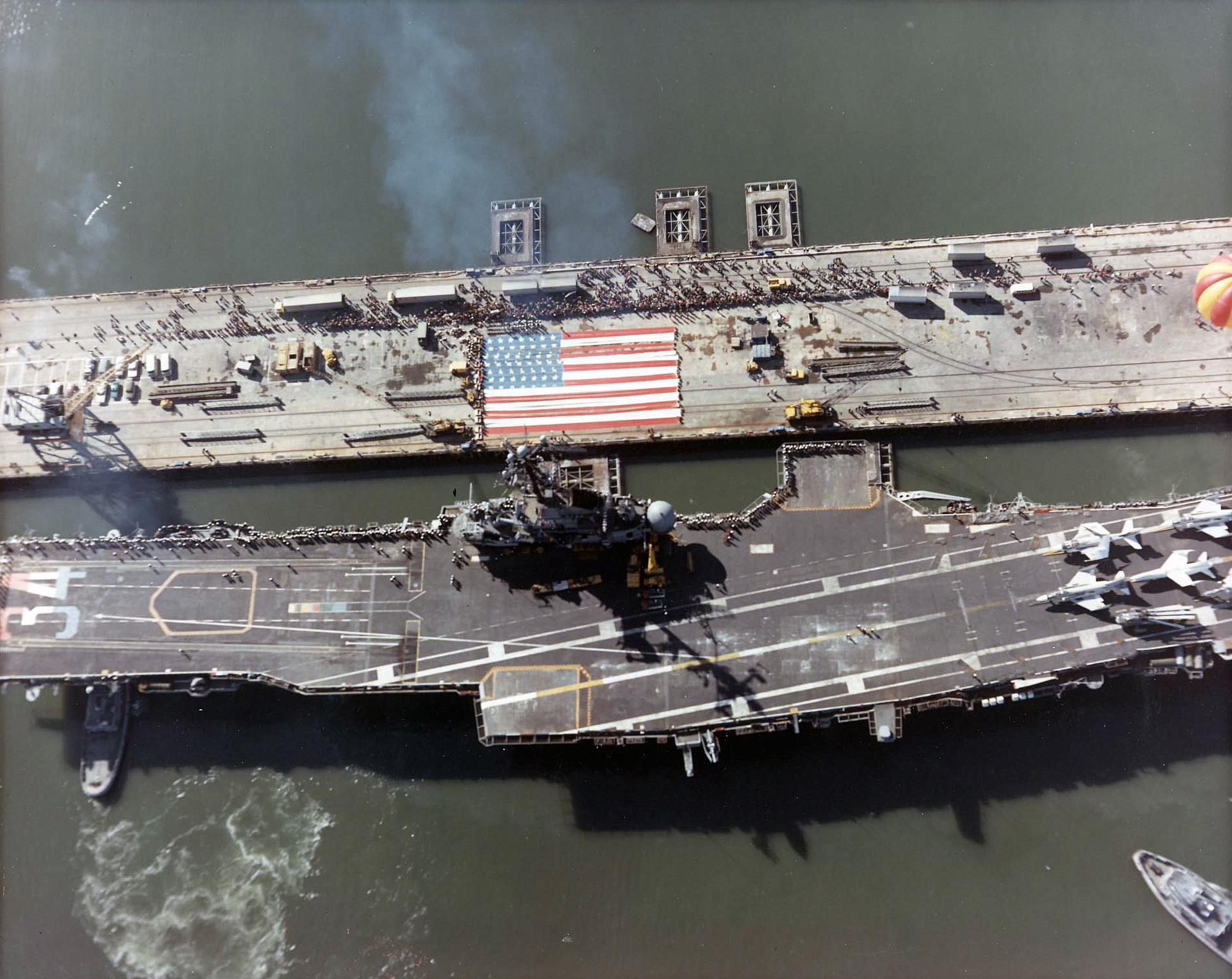
NAS Alameda was established November 1, 1940, on a man-made island in San Francisco Bay adjacent to the city of Alameda, California. The installation operated as one of the West Coast’s primary naval aviation facilities for more than five decades — through World War II, Korea, Vietnam, and into the post-Cold War drawdown. The Navy decommissioned it April 1, 1997, following the 1993 Base Realignment and Closure process.
The base reportedly served as homeport for multiple aircraft carriers, including USS Enterprise (CV-6), USS Hornet (CV-12), and USS Carl Vinson (CVN-70). It housed thousands of active-duty Navy and Marine Corps personnel and maintained a large civilian workforce across its industrial, maintenance, and administrative facilities. The waterfront ship repair complex made Alameda one of the busiest industrial naval installations on the Pacific Coast.
Veterans who served at major homeports including Norfolk, Virginia; San Diego, California; Pearl Harbor, Hawaii; Bremerton, Washington; Jacksonville, Florida; and Charleston, South Carolina face comparable asbestos exposure risks at those facilities — and all are entitled to the same VA presumptive benefits and civil litigation rights regardless of where they now reside.
Why Asbestos Saturated Naval Base Facilities
From the 1930s through the mid-1970s, the Department of Defense mandated asbestos-containing materials across virtually every category of military construction. Federal military specifications required asbestos-containing products by name in pipe insulation, boiler systems, flooring, roofing, and structural fireproofing.
Manufacturers supplying those products to military installations reportedly included:
- Johns-Manville — Kaylo pipe insulation, Aircell pipe covering, transite board
- Owens-Illinois — Kaylo (jointly manufactured and marketed with Johns-Manville)
- Eagle-Picher — boiler block insulation, pipe covering
- W.R. Grace — Monokote spray-applied fireproofing, Zonolite insulation
- Armstrong World Industries — floor tile, ceiling tile
- Celotex — roofing and insulation board
- Georgia-Pacific — asbestos-containing joint compound
- Crane Co. — valve and equipment insulation, pipe components
- Garlock Sealing Technologies — gaskets and packing materials
- Combustion Engineering — boiler systems with asbestos insulation
Military bases supporting active ship repair and aviation maintenance operations documented ACM concentrations exceeding those found in typical civilian construction of the same era.
Facilities at NAS Alameda With Documented ACM Presence
Environmental assessments conducted during the base closure process, EPA NESHAP notifications, and public litigation records collectively indicate asbestos-containing materials were present throughout the installation.
Barracks, Administrative Buildings, and Base Housing
Barracks and office buildings reportedly contained pipe insulation on hot water and steam systems — Thermobestos, Kaylo, and Johns-Manville Aircell — along with vinyl asbestos tile flooring, Armstrong ceiling tiles, and spray-applied Monokote fireproofing on structural elements. Base family housing units constructed between the 1940s and 1960s reportedly incorporated Gold Bond asbestos-containing joint compound, VAT flooring, and Thermobestos- and Kaylo-insulated pipe systems.
Boiler Plants and Steam Tunnel Systems
NAS Alameda’s heating infrastructure relied on high-temperature steam distribution. Those systems were extensively insulated with Thermobestos and Kaylo pipe covering, block insulation on boiler units, and transite board panels and fireproofing supplied by Johns-Manville and W.R. Grace. Steam tunnel access required workers to enter enclosed spaces where ACM on overhead and adjacent pipe runs was subject to routine mechanical disturbance — the worst possible conditions for fiber release.
Machine Shops, Pipe Shops, and Industrial Workshops
Facilities supporting ship repair and aircraft maintenance allegedly used asbestos gaskets and packing manufactured by Garlock Sealing Technologies, thermal insulation from Johns-Manville and Owens Corning, and Crane Co. valve insulation and equipment seals. Cutting, fitting, and replacing those components released respirable fibers into work areas with limited ventilation.
Aircraft Hangars
Large-span hangars used for aircraft maintenance are documented in military construction records as incorporating spray-on Monokote fireproofing and W.R. Grace products on structural steel, Pabco asbestos-containing roofing materials, Johns-Manville transite board panels, and Aircell, Thermobestos, and Kaylo insulation on wall and ceiling systems.
Drydock and Waterfront Ship Repair Facilities
NAS Alameda’s ship repair complex — which serviced aircraft carriers and other vessels homeported at the installation — is documented in litigation as a high-exposure environment for both Navy personnel and civilian tradespeople. Workers in those facilities reportedly handled Garlock gaskets, Johns-Manville and Eagle-Picher pipe insulation, Combustion Engineering boiler components, and Crane Co. steam line equipment during vessel maintenance, renovation, and overhaul.
Who Was Exposed: Military, Civilian DoD, and Contract Workers
Military Personnel
Active-duty Navy and Marine Corps personnel assigned to the base for training, administrative, or operational duties worked in and around ACM-laden structures daily. Naval aviators and aviation mechanics worked in hangars where Monokote fireproofing, transite board, and pipe insulation were reportedly present overhead and on adjacent systems. Sailors assigned to carriers homeported at Alameda also performed maintenance in base industrial facilities, exposing them to Thermobestos, Kaylo, and Garlock products independent of any shipboard exposure.
Civilian DoD Employees
Civilian workers in base maintenance, engineering, and supply departments handled asbestos-containing materials during routine operations — replacing pipe insulation, maintaining boiler systems, working in mechanical spaces where ACM was present on overhead pipe runs and equipment. Civilian workers on DoD contracts may qualify for benefits under the Longshore and Harbor Workers’ Compensation Act (33 U.S.C. § 901) in addition to trust fund and civil litigation claims.
Contract Trades Workers
Private contractors supporting base operations employed the trades most heavily exposed to ACMs at military installations:
Pipefitters and plumbers — members of Plumbers and Pipefitters UA locals historically working at West Coast bases — regularly handled Thermobestos and Kaylo pipe insulation, Johns-Manville transite board, and asbestos-containing joint compound. Cutting pipe covering to fit generated visible dust clouds in enclosed mechanical spaces.
Boilermakers worked directly with boiler block insulation and high-temperature pipe covering manufactured by Johns-Manville, Eagle-Picher, and W.R. Grace. Removing and replacing that insulation during boiler maintenance distributed asbestos fibers throughout confined boiler rooms.
Electricians installed and maintained electrical systems in spaces lined with Monokote fireproofing and transite board. Drilling, cutting, and wire-routing through ACM-containing walls and ceilings released fibers into the breathing zone.
Insulators — including members of Heat and Frost Insulators locals working in the Bay Area — directly applied, removed, and refitted Thermobestos, Kaylo, and Aircell products. That work generated the highest per-task fiber concentrations documented for any trade on base.
Sheet metal workers worked alongside insulators and boilermakers in mechanical spaces, sharing exposure to disturbed ACM without direct handling of insulation materials.
Ship Repair Workers
Dockworkers, riggers, and maintenance workers employed in the waterfront and industrial complex handled gaskets, insulation, and fireproofing materials during vessel maintenance. That work placed them in simultaneous contact with multiple ACM product types — Garlock gaskets, Crane Co. components, Combustion Engineering systems, and Johns-Manville transite board.
Peak Exposure Periods and Documented ACM Disturbance
World War II Construction and Operations (1940–1945)
Initial base construction reportedly used ACMs across all facility categories. Wartime operational tempo created conditions of constant ACM disturbance with no respiratory protection.
Korean War Expansion (Early 1950s)
Facility expansion added structures insulated with Thermobestos, Kaylo, Aircell, and related products consistent with then-current military construction specifications.
Vietnam War Operations (1960s–Early 1970s)
Sustained carrier operations and associated maintenance placed sailors, Marines, and civilian trades workers in repeated contact with disturbed Monokote fireproofing, transite board, pipe insulation, and gasket materials in industrial facilities.
Renovation and Decommissioning (1970s–1997)
Renovation work performed before strict EPA NESHAP compliance was enforced allegedly disturbed previously encapsulated ACMs throughout the facility. The base closure process involved extensive remediation that further disturbed asbestos-containing materials in structures slated for demolition or conversion.
Asbestos-Related Diseases: Mesothelioma, Lung Cancer, and Asbestosis
Mesothelioma and VA Presumptive Service Connection
Mesothelioma is a malignancy of the mesothelial lining of the lungs (pleural mesothelioma), abdomen (peritoneal mesothelioma), or heart (pericardial mesothelioma). Asbestos fiber inhalation is the only established cause. Median survival after diagnosis runs 12 to 21 months with multimodal treatment. The disease qualifies for VA presumptive service connection under 38 CFR § 3.309(d) — veterans need not prove causation to receive disability compensation.
Asbestosis and Progressive Fibrotic Lung Disease
Asbestosis is a progressive fibrotic lung disease driven by accumulated fiber burden in lung tissue. Exposure duration and intensity determine severity — workers with years of direct contact with Thermobestos, Kaylo, and Aircell products developed more severe restriction than workers with incidental contact. Symptoms include chronic cough, dyspnea, chest pain, and declining pulmonary function on spirometry.
Asbestos-Related Lung Cancer
Workers with documented occupational contact with ACMs manufactured by Johns-Manville, Eagle-Picher, W.R. Grace, Owens Corning, and Garlock face elevated lung cancer risk — particularly former smokers, where asbestos and tobacco act synergistically. Asbestos-related lung cancer is clinically indistinguishable from lung cancer caused by other agents, but epidemiological evidence firmly establishes asbestos as an independent carcinogen.
Pleural Disease and Early Detection
Pleural plaques, pleural thickening, and pleural effusion are non-malignant conditions that confirm prior asbestos fiber exposure. Plaques and thickening are clinically silent in many cases but appear on imaging and establish the exposure history needed to support both VA and civil claims. Pleural effusion warrants immediate evaluation for underlying malignancy.
Latency: Why Diagnosis Decades After Exposure Does Not Bar Claims
Asbestos-related diseases typically appear 20 to 50 years after initial fiber exposure. A pipefitter who handled Kaylo insulation at NAS Alameda in 1965 may receive a mesothelioma diagnosis in 2025. That latency gap does not bar recovery. VA claims carry no statute of limitations. Civil claims run from the diagnosis date, not the exposure date — a critical distinction that preserves the rights of veterans diagnosed long after their service ended.
VA Presumptive Benefits: 38 CFR § 3.309(d) and No Filing Deadline
Under 38 CFR § 3.309(d), veterans diagnosed with mesothelioma, as
For informational purposes only. Not legal advice. No attorney-client relationship is created by reading this page. © 2026 Rights Watch Media Group LLC — Disclaimer · Privacy · Terms · Copyright